In my study, I have a poster of Ildefons Cerdà’s Barcelona – the famed architect’s plan for the city dating back to 1861. Plaça de les Glòries sits firmly in the middle of his modern city. Cerdà imagined Glòries as the political, social, and cultural centre of Barcelona, connecting major arterial roads and uniting neighbourhoods.
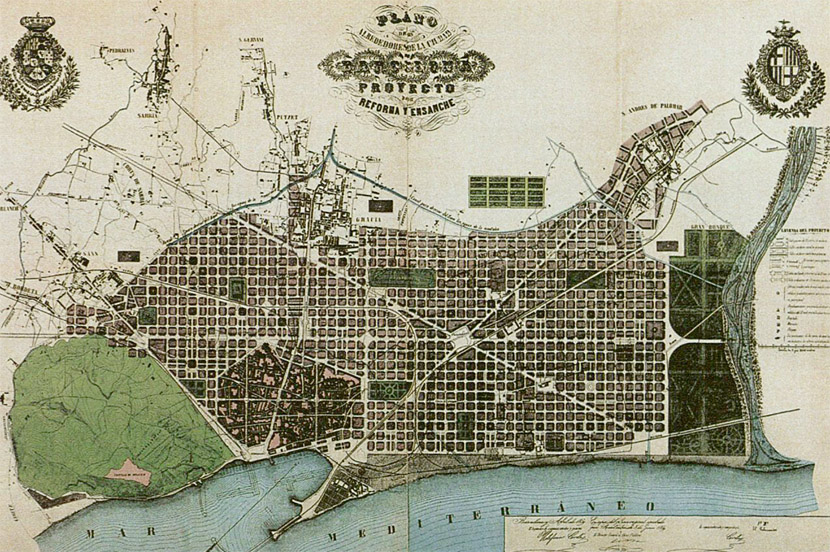
Cerdà’s plans were never realised, and so began a frustrated history for the square: a place to pass through, but never to linger in. I live close to Glòries, and having just witnessed its most recent transformation into a finished park, I was curious to dig into its history.
In the early 20th century Glòries turned into “a scene of clandestine activities, a hotbed of crime and gunplay”, according to the city council’s historical records. Not a place for the well-to-do of Barcelona. Following the war, the area turned into a shantytown, as it would remain until the 1960s.
The 1970s were the years when urban planners went car-crazy. Planners in Barcelona decided to prioritise the motorist, gutting the square and turning into an enormous motorway with a pedestrian bridge over the top. If it was a place people didn’t want to linger before, it certainly wasn’t now.

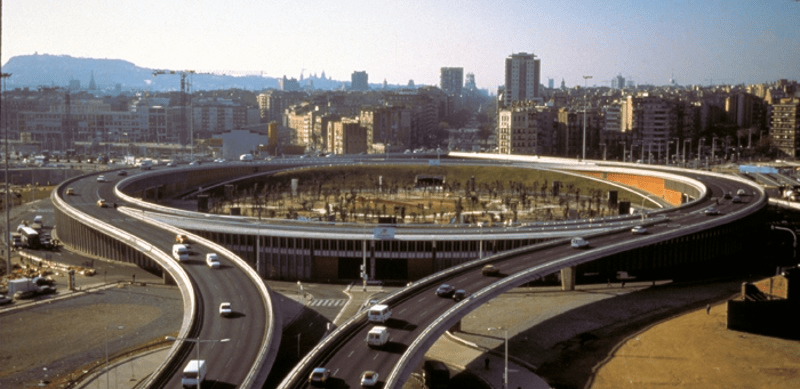
In the 90s, planners thought a better way to organise things would be to elevate the cars, building a terrifying floating roundabout that left a dark, noisy and polluted space beneath for pedestrians.
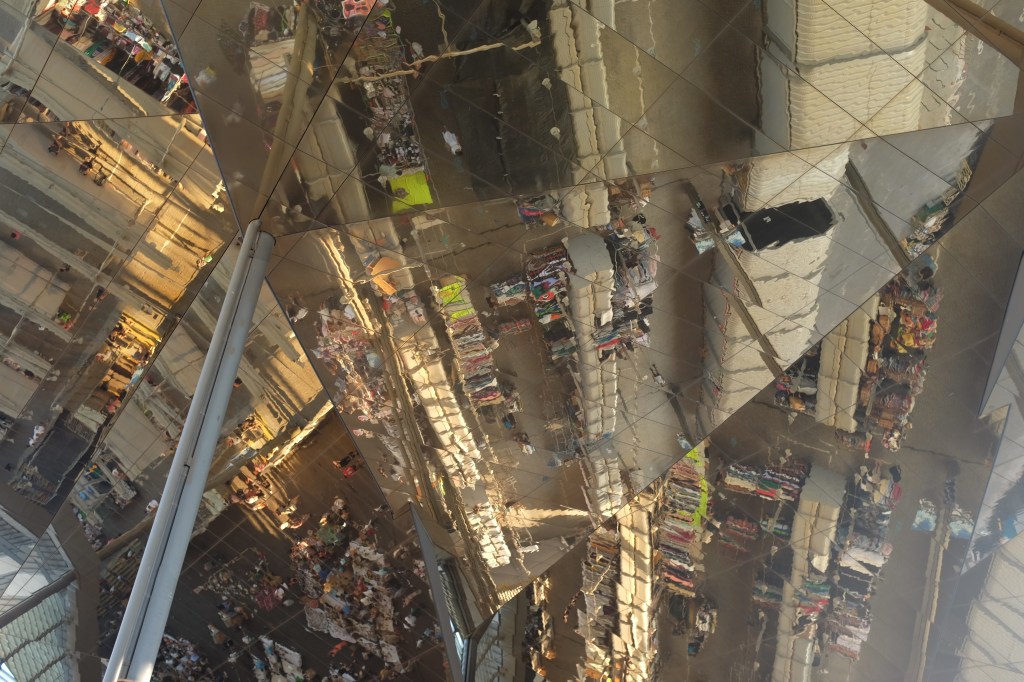
During these years, the area around Glòries improved, with the arrival of Torre Agbar, the Design Museum, and the Westfield Shopping Centre. The Encants Market, with its 25-metre-high reflective gold roof, finally brought a reason for people to visit the square.
By now the Plaça de les Glòries was flanked by important places to work, shop, eat and be entertained. The surrounding Poblenou neighbourhood is transforming from an industrial area to a tech hub full of young professionals. The central square was the missing piece to the total transformation of the area.
Around 2007, the roundabout was set for destruction as Barcelona had already started implementing pedestrian first planning solutions like the superblocks. But there still needed to be a road connecting Gran Via, the major arterial road connecting the whole of Barcelona. They had tried going above the square, plowing straight through it, so the only option left was to go under it.
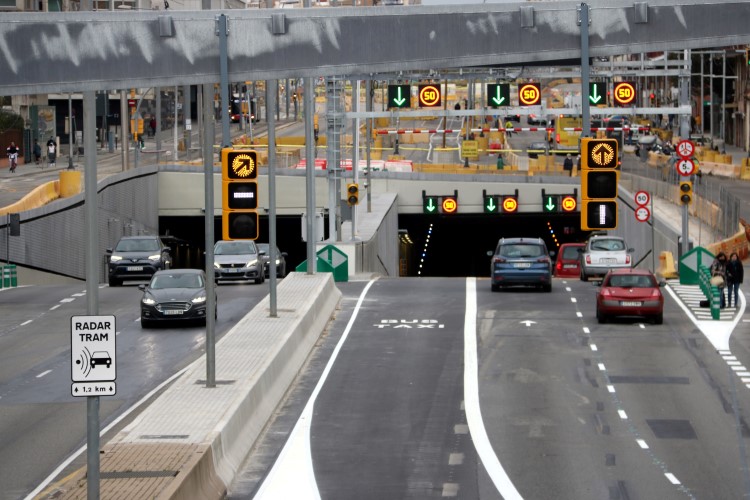
The next seven years were spent on a major construction project: building a one-kilometre-long underground tunnel beneath Plaça de les Glòries to connect Gran Via, allowing vehicles to pass underneath at a cost of €192 million.
Once the tunnel was opened in 2022 and traffic moved underneath the square, work could finally begin on converting the remaining square into a public space worthy of being a centrepiece of Barcelona.
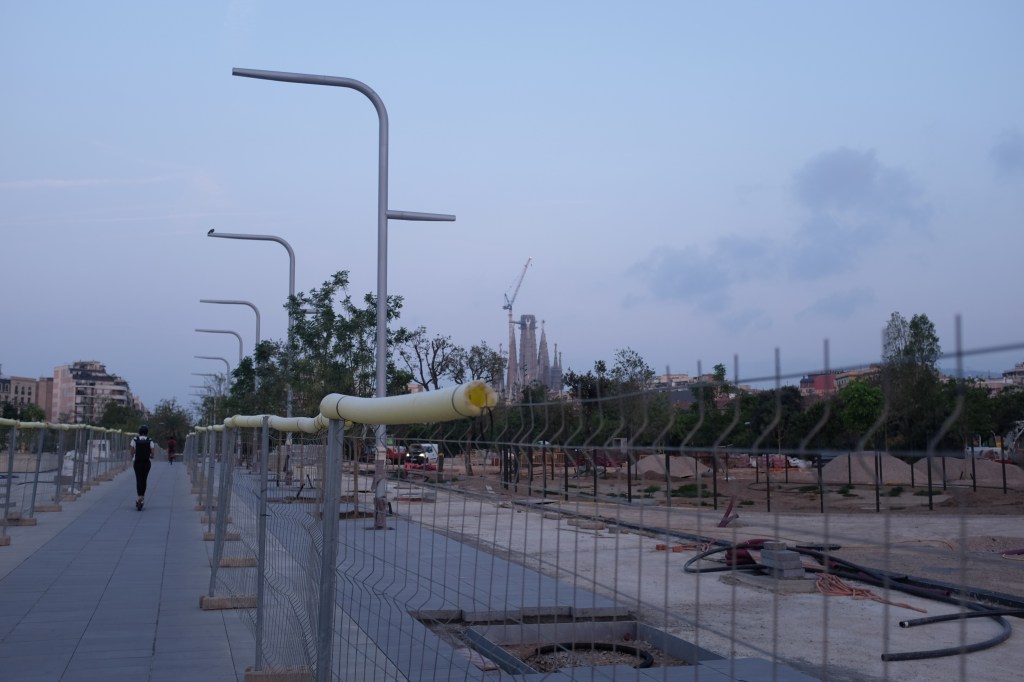
In 2023 and 2024, my commute took me from one side of Plaça de les Glòries to the other. The cycle lane shifted constantly as construction progressed, and buses were rerouted just as often. Confusion and near misses were common. Poorly planned and signposted cycle lanes meant e-bikes travelling at 20 km/h often had to brake sharply to avoid parents walking with toddlers down the same lane, unaware it wasn’t for pedestrians. It was a good lesson in how crucial intuitive, safe cycling infrastructure is in cities – and how badly thought-out infrastructure can be worse than none at all.
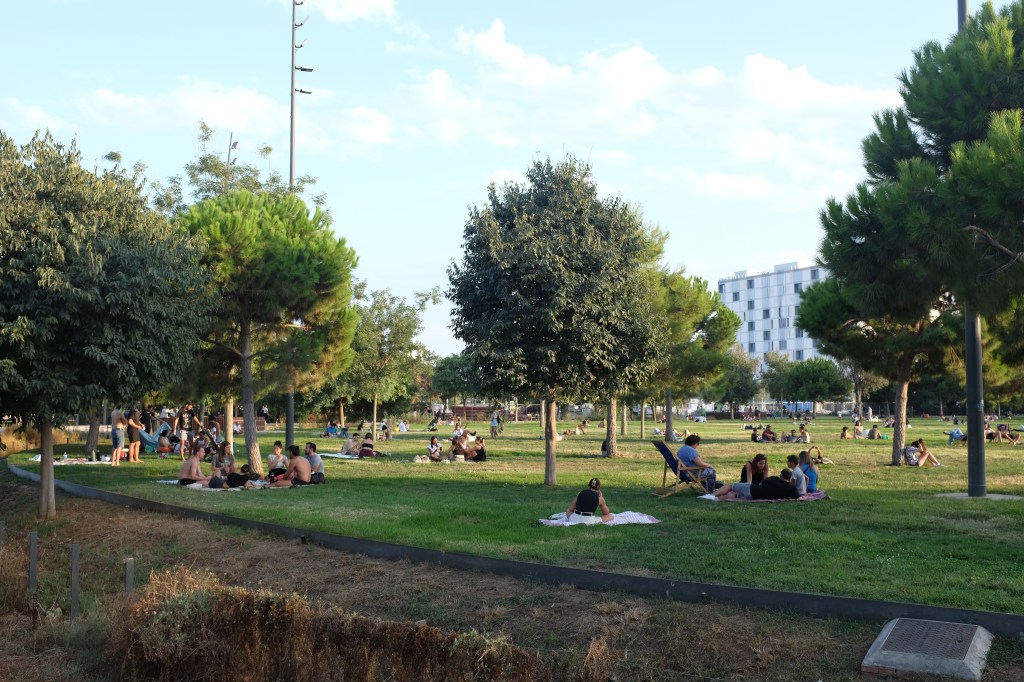
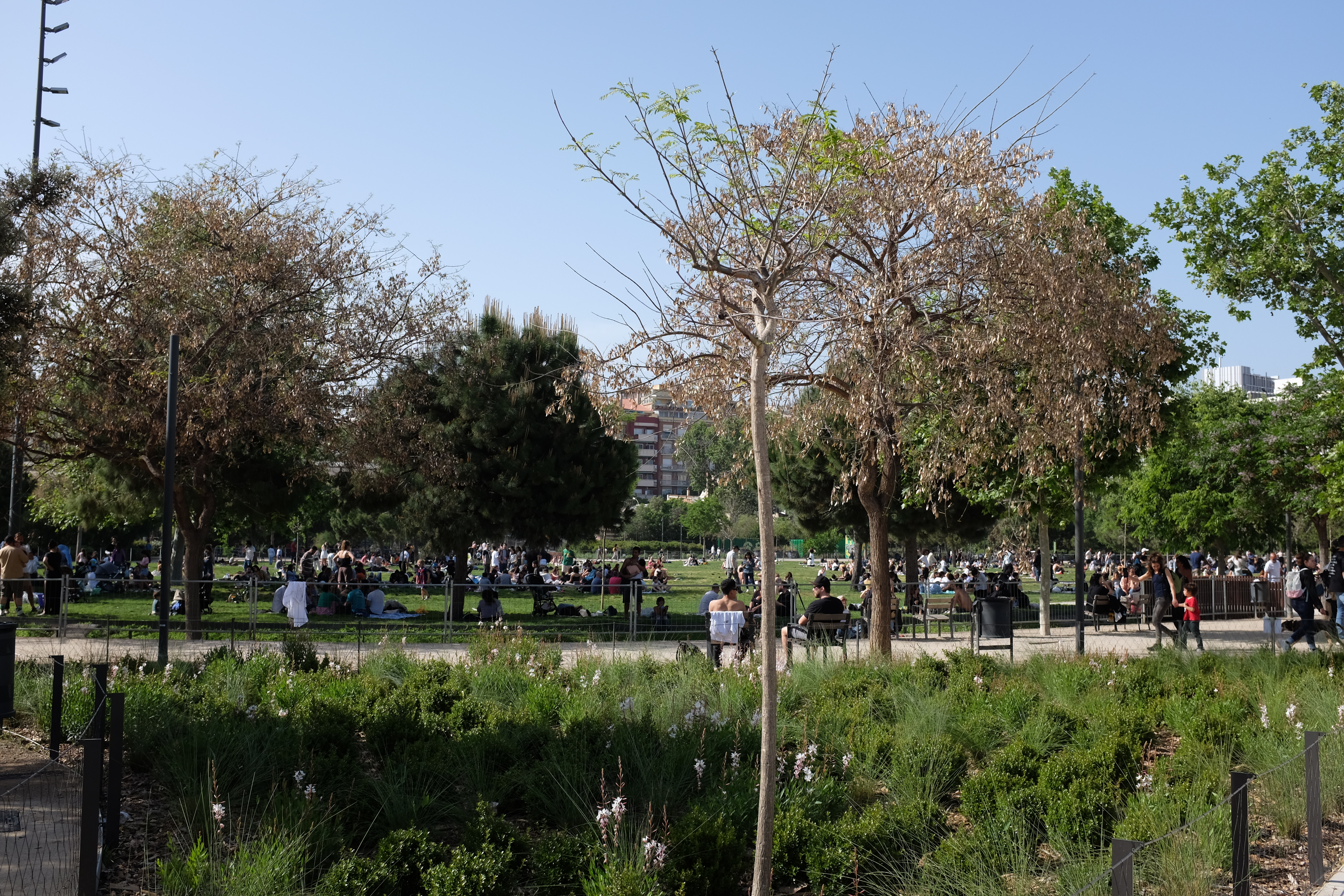
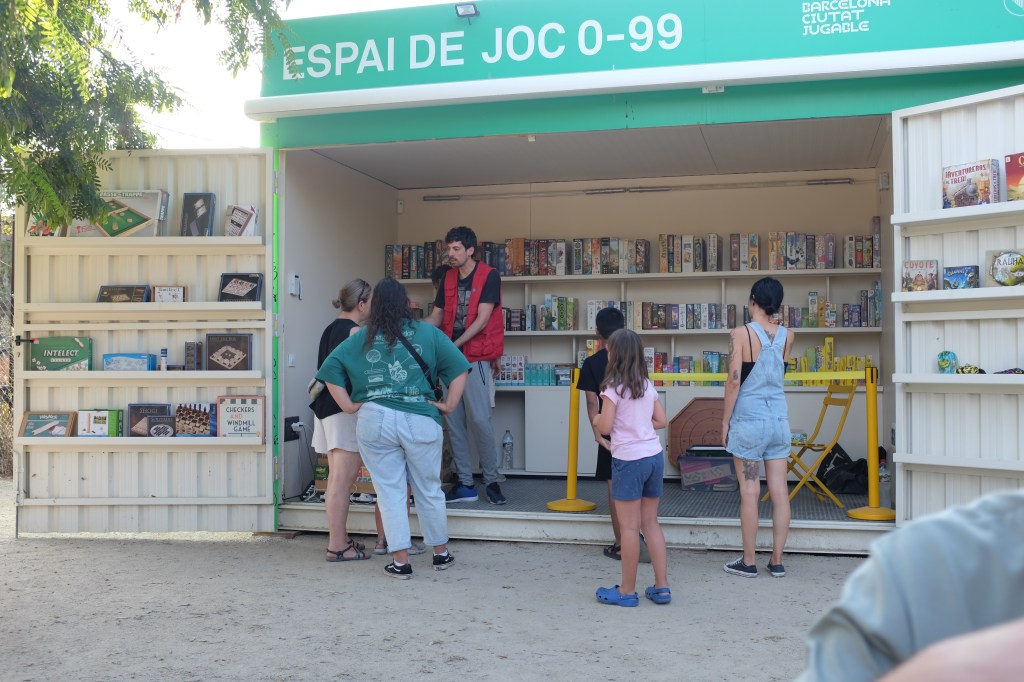
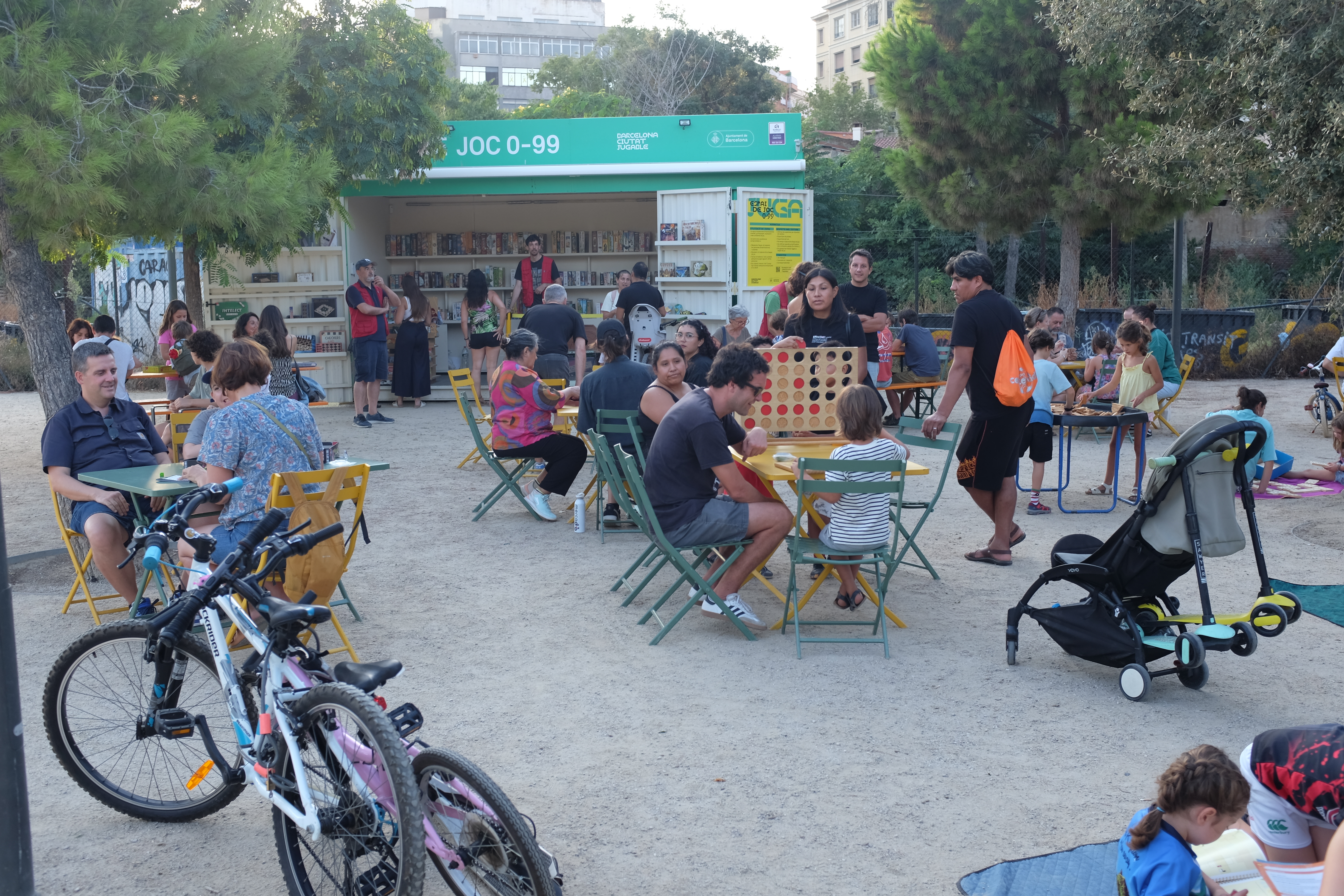
As work continued on the main part of the park, one area was already open — a rare patch of real grass kept lush with frequent watering despite Barcelona’s heat and frequent droughts. One of the city’s many fantastic public services operates here: free access to board games. Groups can grab a spot, pick a game, and play happily for hours, completely free of charge. Many happy Sunday afternoons have been spent here.
In April 2025, the barriers finally came down, and the park was officially opened to the public, with a weekend long festival to celebrate in Barcelona style. I’ve thought a lot about what I make of this place. It’s a remarkable transformation, an enormous project. But that doesn’t mean it’s perfect. Here’s what I think works — and what misses the mark.
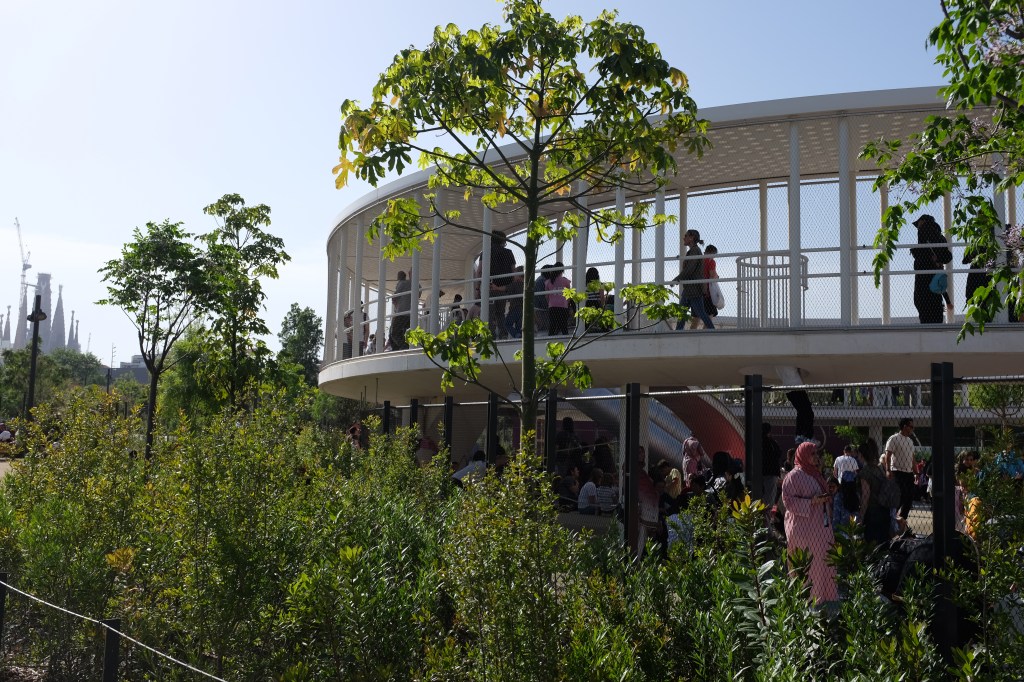
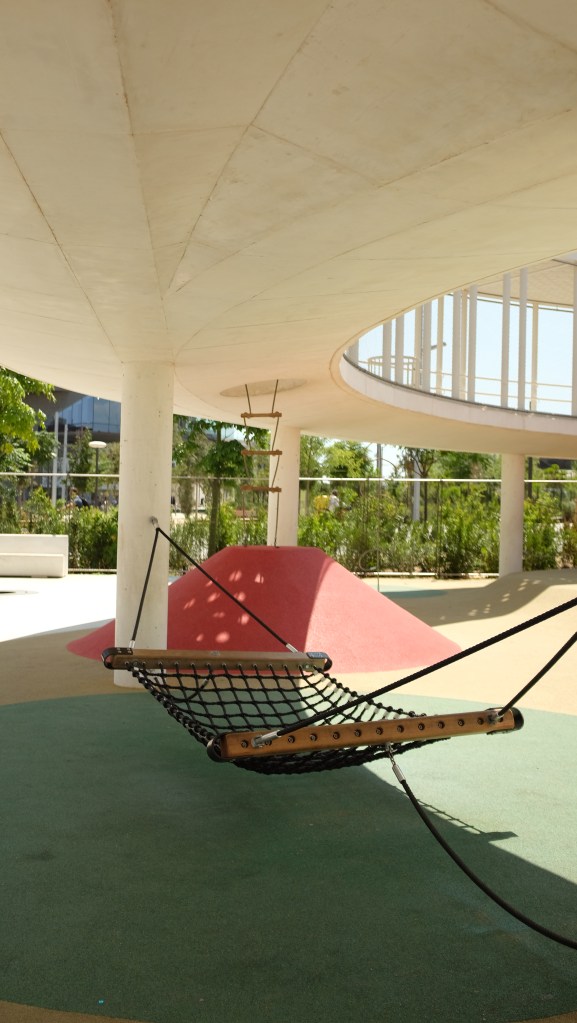
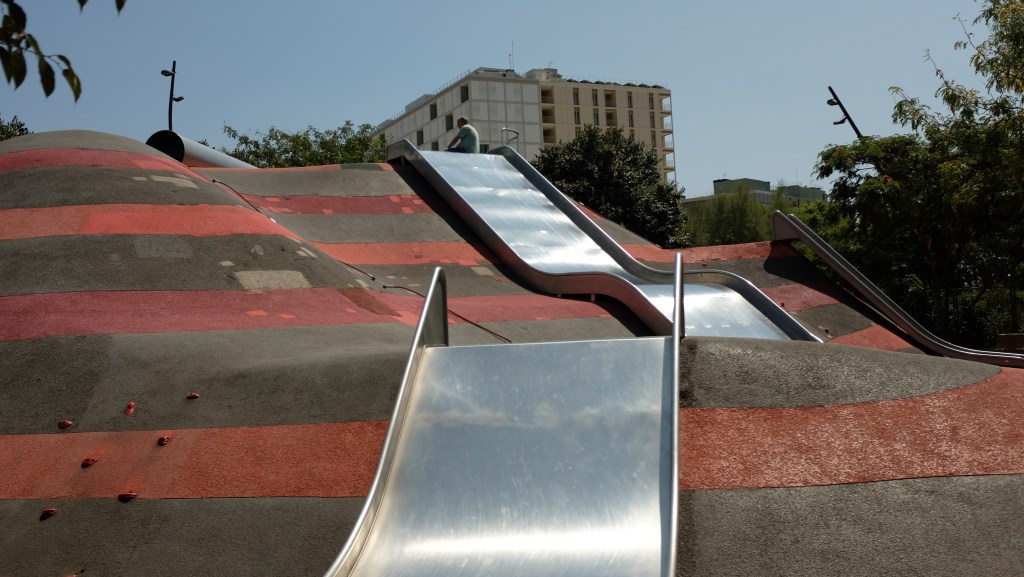
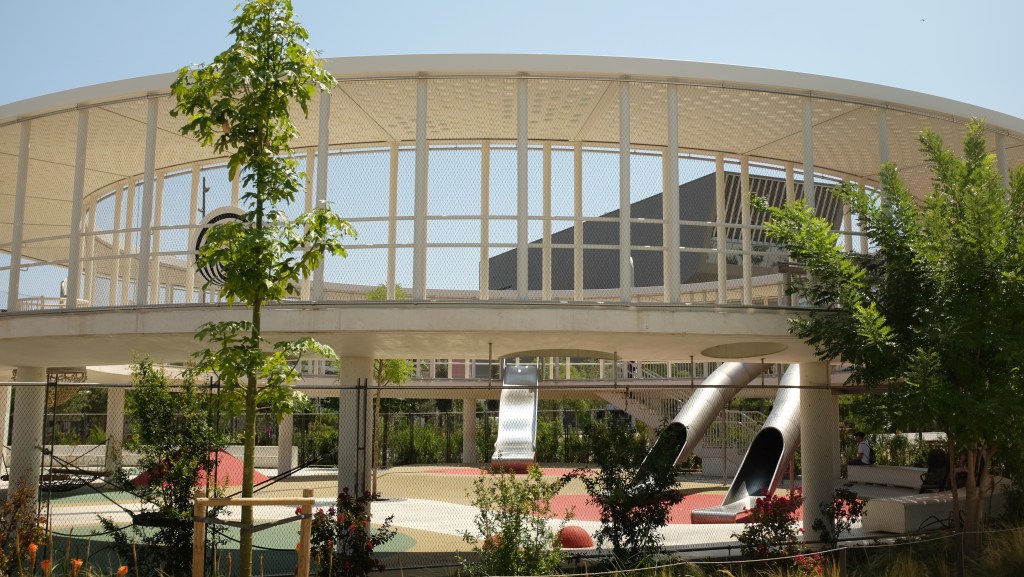
The first thing to say is that the kids have won. The circular playground is a triumph: surrounded by greenery, its roof provides much-needed shade in summer, and it includes everything you’d want from a compact adventure playground: slides, swings, trampolines, and climbing frames. Its only flaw is its popularity; during the summer holidays it’s completely overrun.
I remember one summer night soon after the park opened, I found the playground full of adults – myself included – jumping on trampolines and testing out the slides in the moonlight. Play isn’t really acceptable for adults unless they’re with a child or it’s disguised as exercise – but that doesn’t mean the desire goes away.
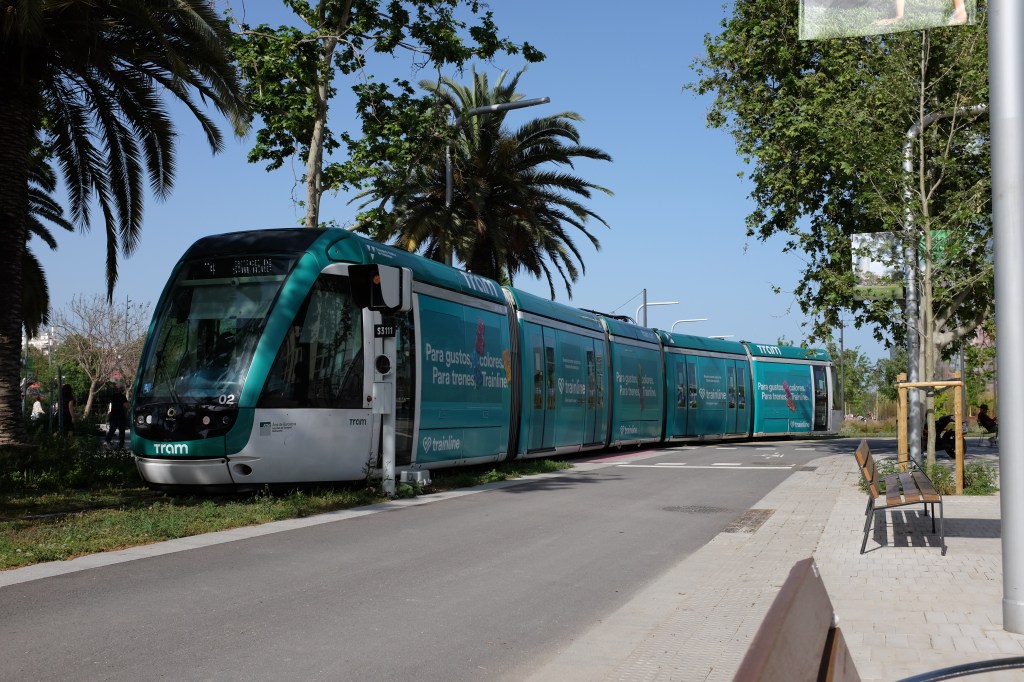
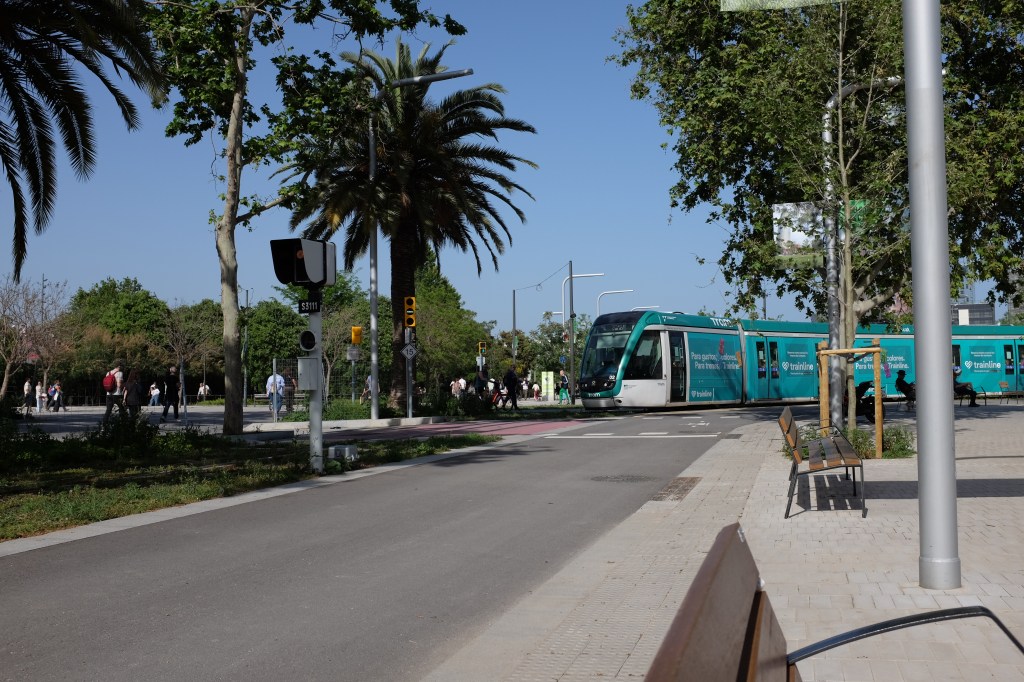
One of the best parts of the transformation of the square has been its connection to public transport. There is a tram stop, metro station and bus stop all within 20 metres of one another. The H12 bus is my favourite in the city for its simplicity: it runs the entire length of Gran Via, from number 1 to 1189.
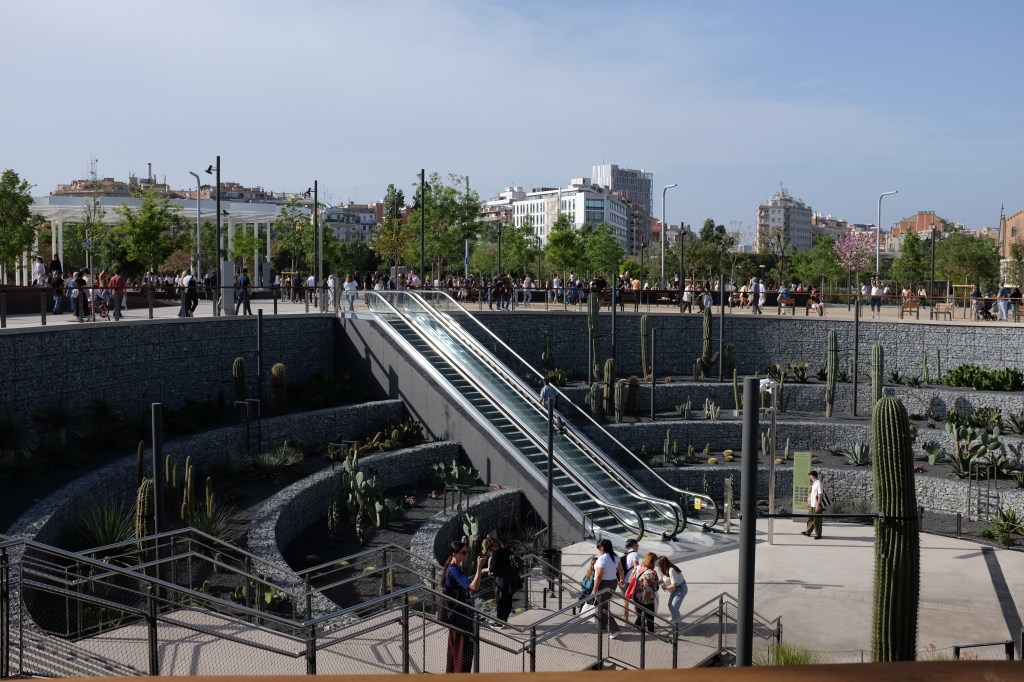
The metro entrance in particular is very striking. If it isn’t featured in a surrealist film, or at the very least an indie music video soon, I will be sorely disappointed.
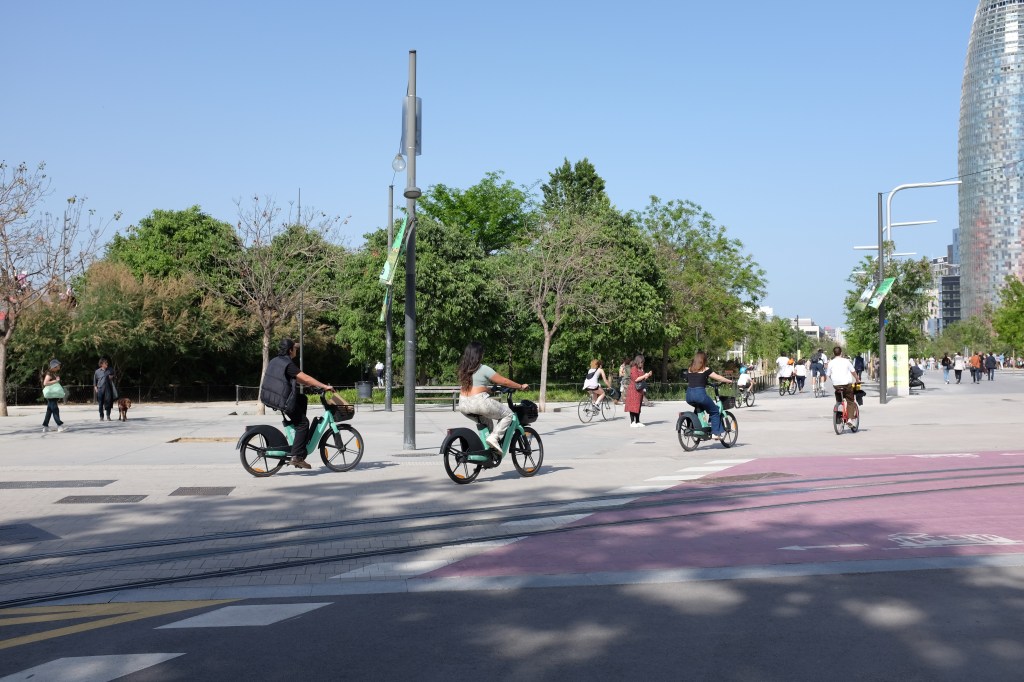
Whilst the public transport options are exceptional, the cycling infrastructure in Parc de les Glòries remains a definite point of contention.
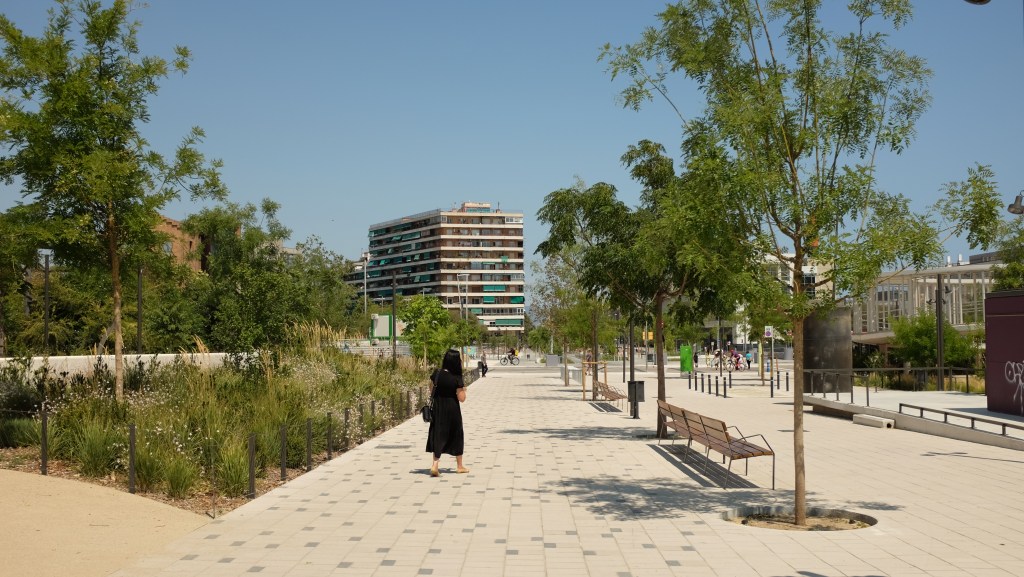
Cycling lanes are marked by little black squares on the ground as, very difficult to notice unless you know what you’re looking for. I only found out it was a cycle ‘lane’ through trial and error.
When the park first opened, there was chaos. Cyclists going every which way, children running around nearly knocked over by e-scooters going too fast. Over time it’s calmed somewhat but I believe the volume of cycle traffic through this park warrants a separated cycle lane.
When exploring the Superblocks last year, I learned that those spaces were designed primarily for pedestrians: cyclists could pass through but only at pedestrian pace, with faster routes provided on nearby streets. The same logic seems to have been applied in Glòries, but it doesn’t work. There’s no convenient alternative for crossing Gran Via, so cyclists rush through the park while pedestrians often don’t realise they’re walking in a cycle path.
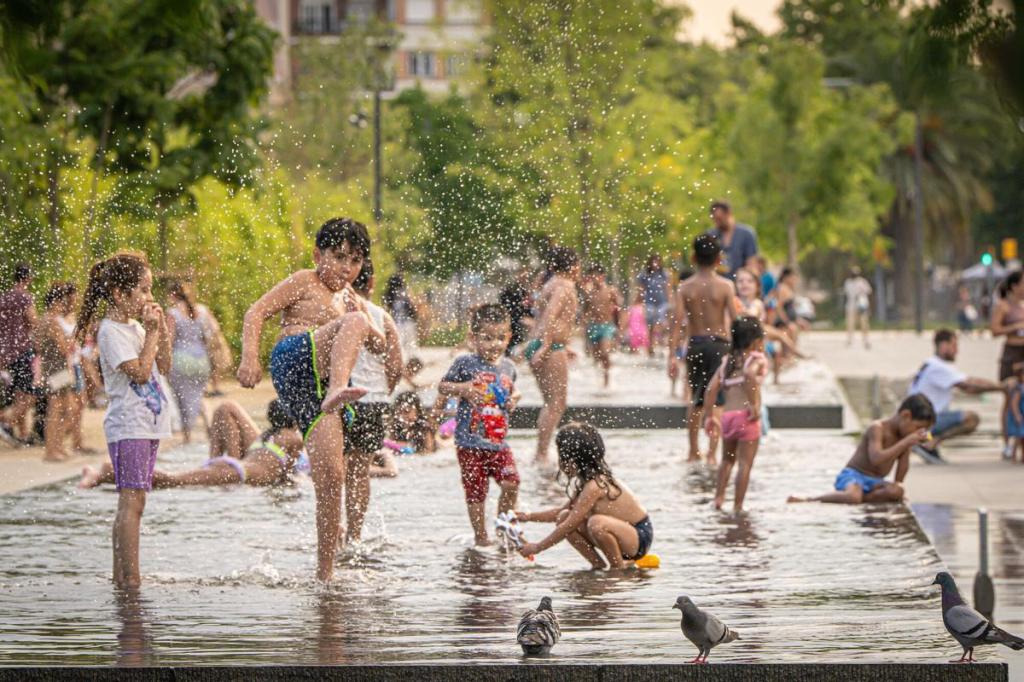
Another feature that doesn’t work in practice is the water fountain, or “reflecting pool”. This shallow fountain quickly became a makeshift paddling pool, with children shrieking with joy and splashing in the July heat. With no barriers, this slippery concrete structure rising up to a metre above the ground was an obvious hazard. The council soon spoke out against using the fountain as a pool, scolding parents. But, to quote Jane Jacobs, “There is no logic that can be superimposed on the city; people make it, and it is to them, not buildings, that we must fit our plans.” It’s unfortunate that the council designed a fountain that so closely resembled a paddling pool, then blamed children and parents for using it as such on the hottest days of the year.
Now, the fountain has been switched off.
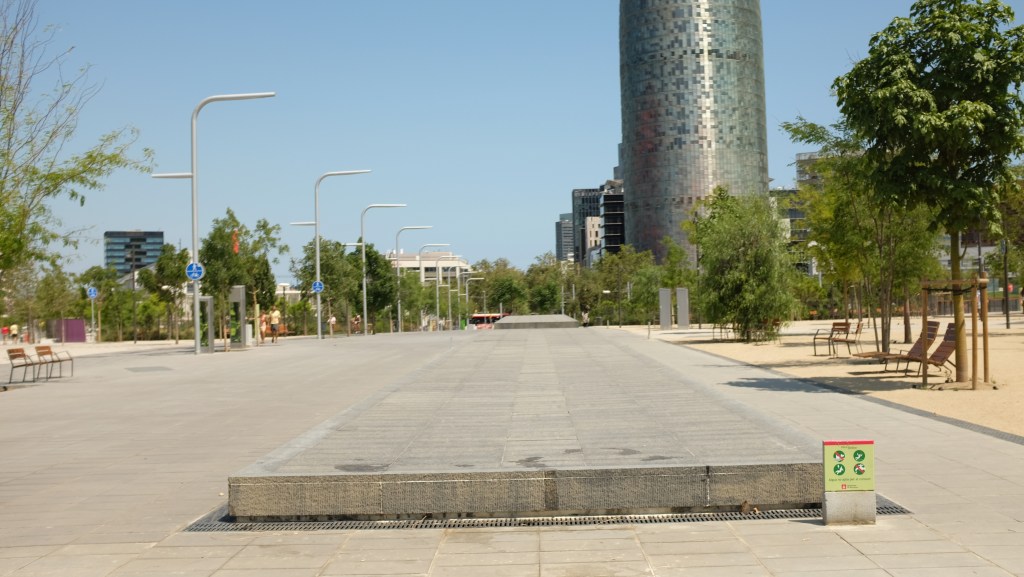
There’s no denying there’s a lot of concrete in the park. Big empty patches of grey, which in summer feels like standing in a hot saucepan. Small trees are spread around, which over the coming years will begin to provide the park with much needed shade.
I don’t mean the place should be a bright oasis of grass, guzzling water in the parched Barcelona climate, but perhaps inspiration could have been taken from French parks and promenades: dirt or gravel paths rather than concrete. Then again, Glòries isn’t just a park. Structurally it’s a roof, one that covers vital transport tunnels below for cars and the metro. The concrete limits how much water seeps downwards, plus it’s durable and easy to maintain. Aesthetics second, practicality and safety first.
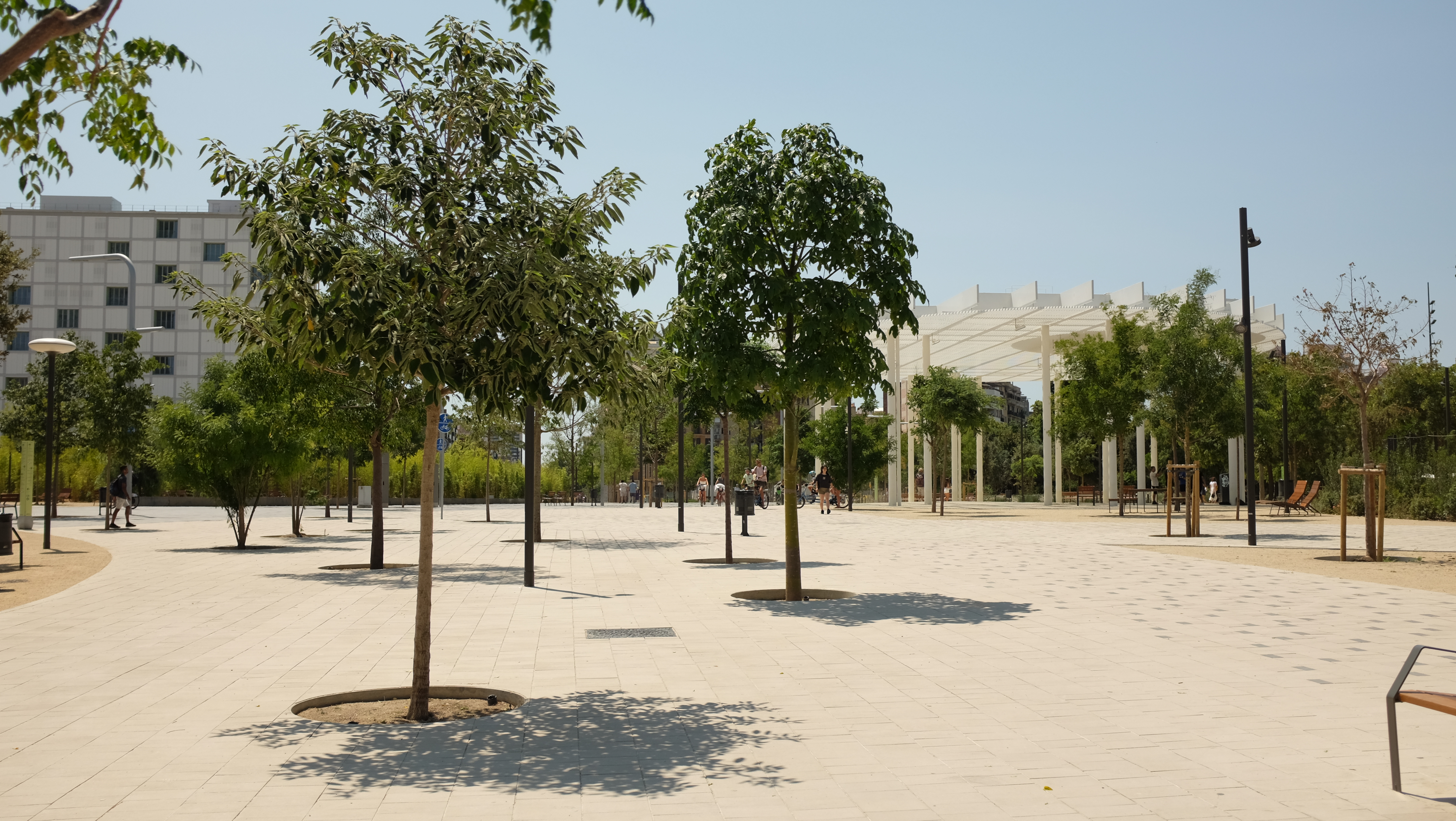
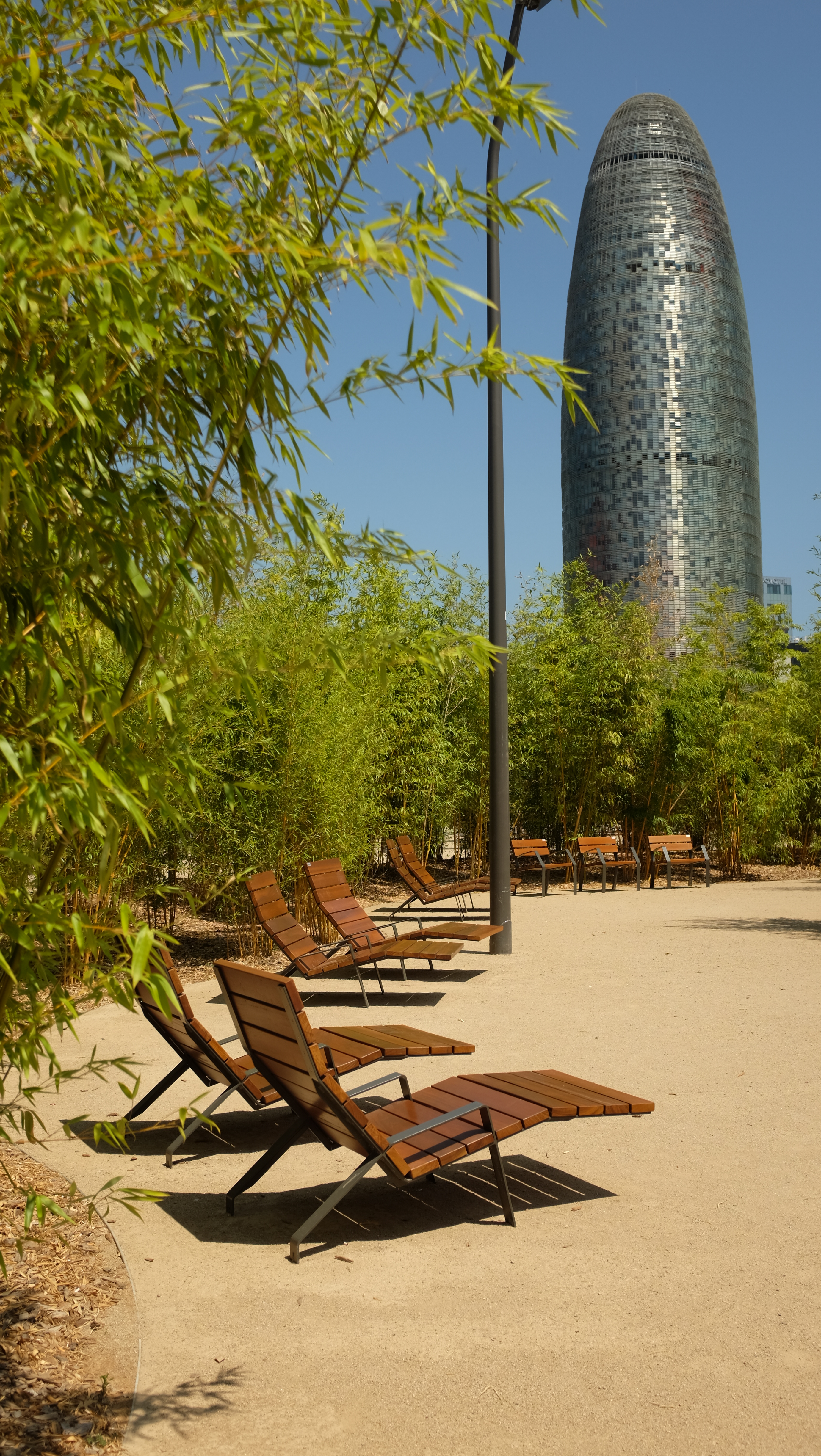
Vocabulary also plays a part in how the space is perceived. The city calls it a “park”, but that word carries certain expectations. Growing up in the UK, a park meant a fenced green area with trees, grass, muddy paths, maybe a pond, and distance from roads. Glòries, by contrast, functions as a central square – a multiuse space for play, rest, transport, protests, concerts and yes, some green space. It’s not a park in the traditional sense, but rather a civic hub as Cerdà imagined it.
Plaça de les Glòries has needed plenty of time. Time to evolve from a wasteland, to an idea, a motorway, a construction site and finally a park. But the waiting isn’t over yet. The trees planted in Glòries are young: saplings that need a good few decades to mature and provide much needed shade and cooling. So whilst the park opened to much fanfare this year, for it to become the centrepiece that Cerdà imagined we must wait for nature to take its course. Time will tell.
–
Thanks for reading! Special mention to this article by Jordi Palmer: Las siete vidas de Plaza Glories, la plaza central que nunca fue (The Seven Lives of Plaza Glories, the Central Square That Never Was). An excellent historical summary, both interesting and extremely useful for this blog!
 270km
270km 
Leave a comment