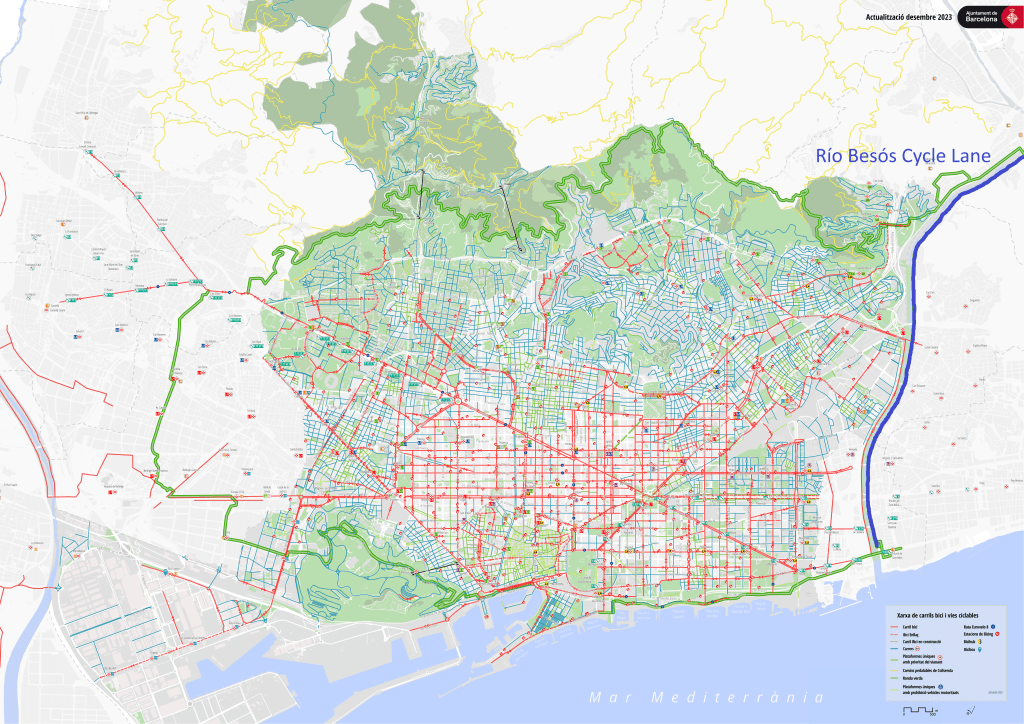
My commute home is a 24km cycle, and I love it. I could take the train, which runs every 10 minutes from the rather posh town where I work to the centre of Barcelona. Cycling home certainly isn’t quicker or more convenient but I cherish the 1h 15m (1h 30m with a strong crosswind) journey. My route takes me into deep forest, bustling towns, and, finally, through the Parc Fluvial del Besòs (River Besòs Park), the real icing on the cake. The park is a relative unknown, and absolutely deserves to be shouted about. Today, I’d like to write a little about its history and charms.
Bad Beginnings
In 1995, work started on redeveloping the Besos river. Before the works began, the river’s ecosystem was at risk of collapse, it was prone to flooding, and offered little in the way of public access. The redevelopment took over 10 years to complete, involving multiple municipal councils, urban planners, biodiversity experts and local residents. Today, the park boasts a cycle lane over 6 km long, plenty of green space, and a wetland area for wildlife.
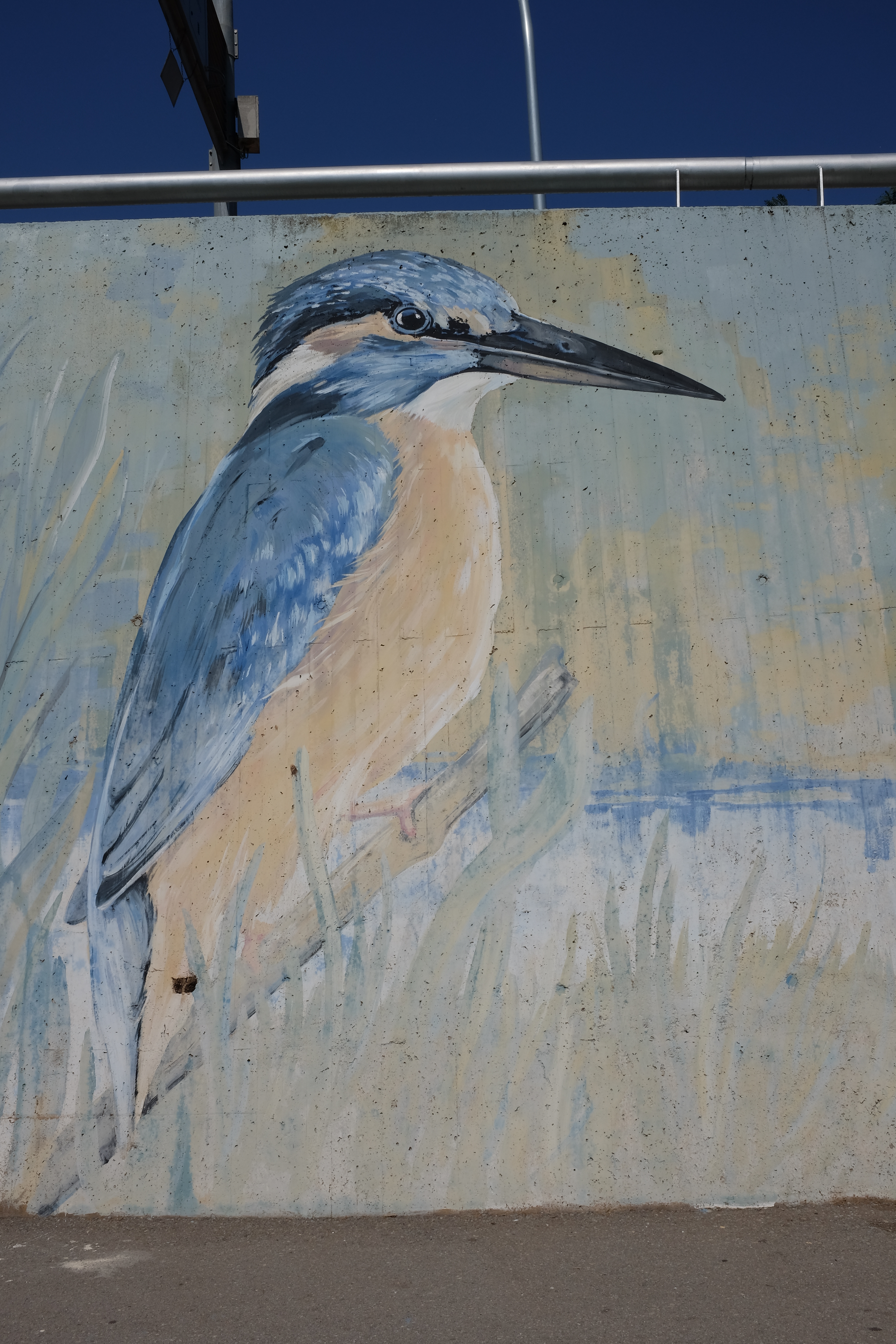
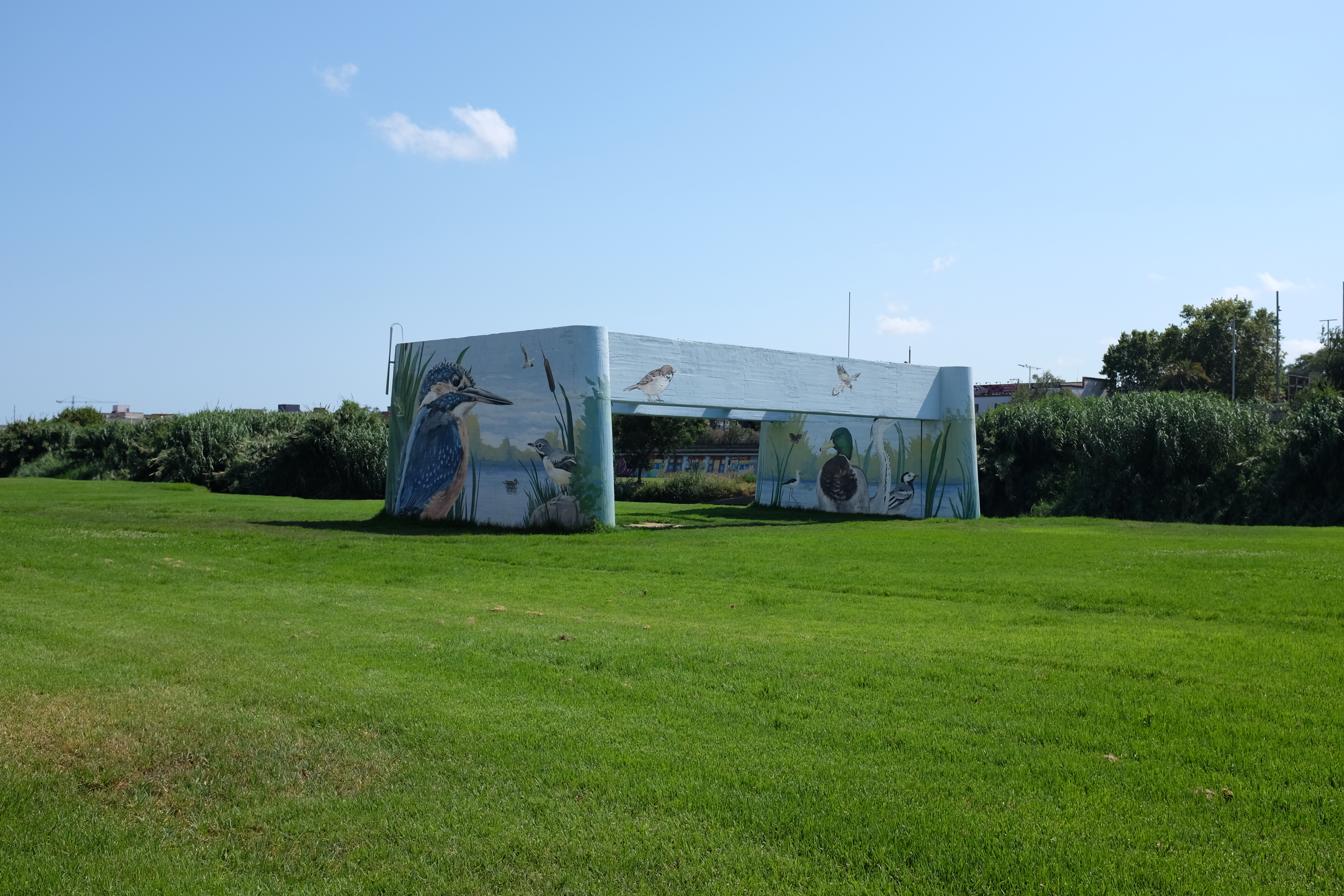
The wetlands at the upper end of the path, towards the town of Montcada, offer a home for more than 200 species of birds. This is where the cycle lane starts.

The Chocolate Factory
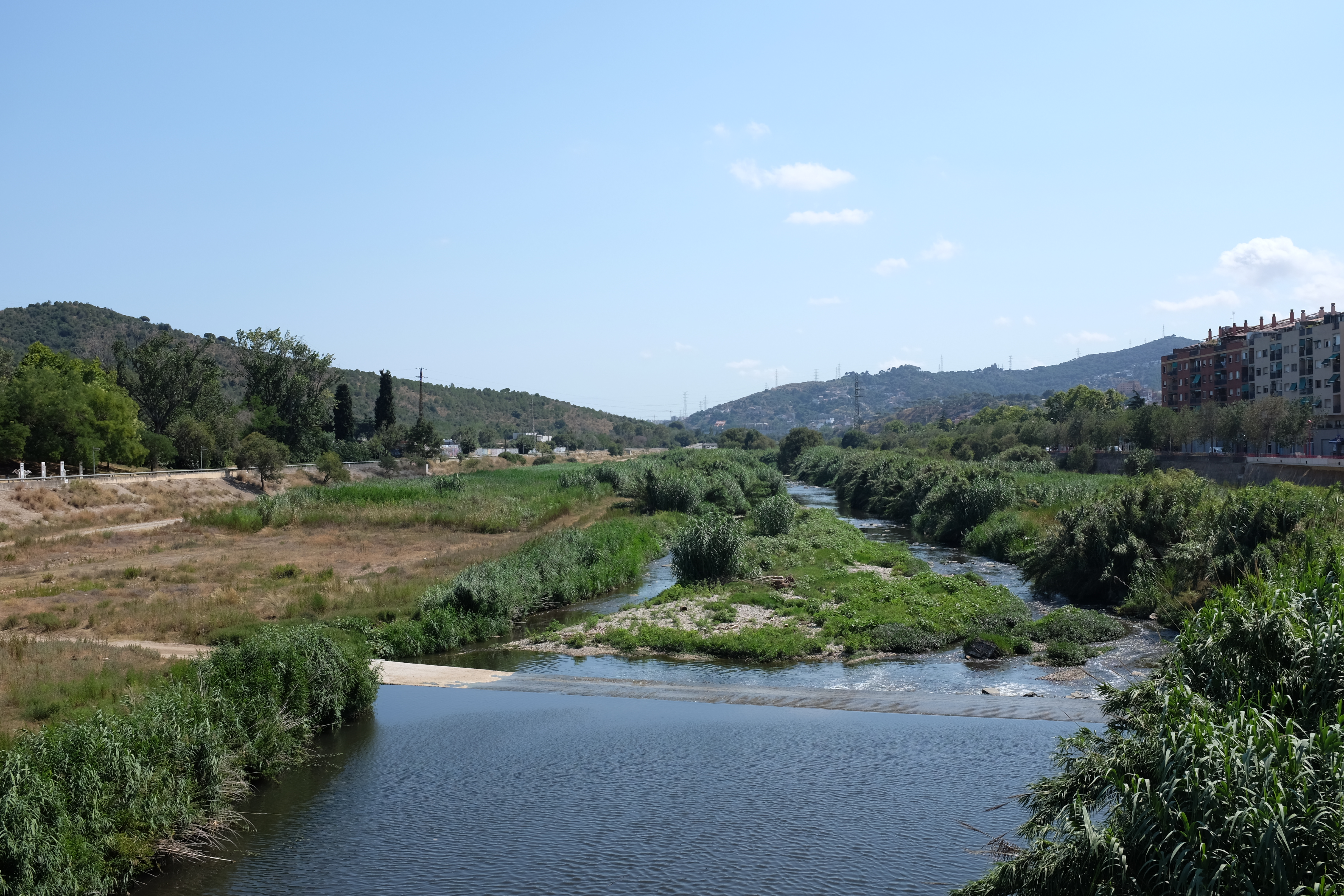
As I start my journey down the River Besòs, the industrial zone the outside of Barcelona comes into view, and I can smell it before I can see it. The most iconic factory – that of chocolate milk company Cacaolot – wafts sickly, nausea inducing fumes over the surrounding area. Chocolate milk produced at this scale does not produce a pleasant aroma, and it’s recommended to breathe through the mouth at this stage.
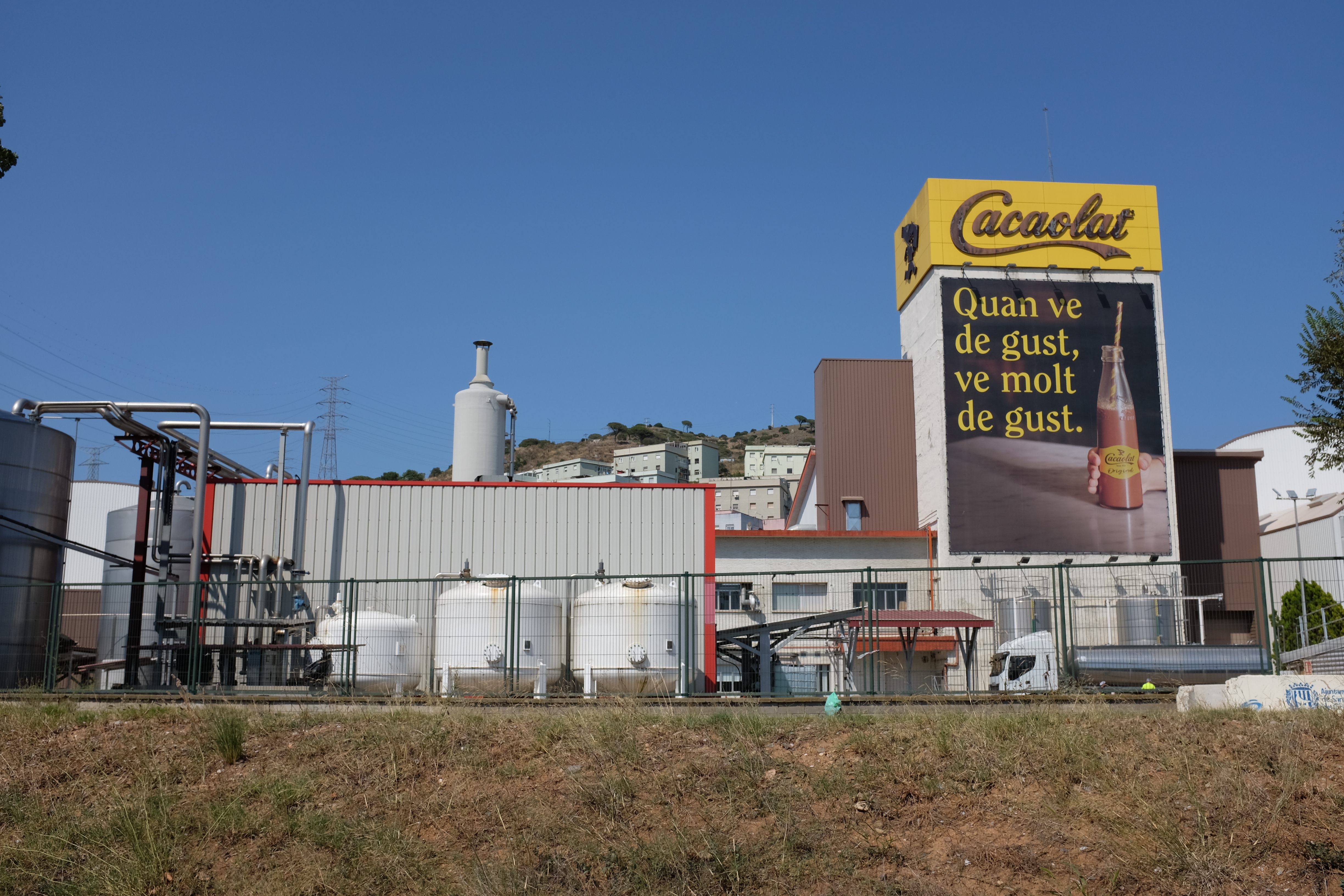

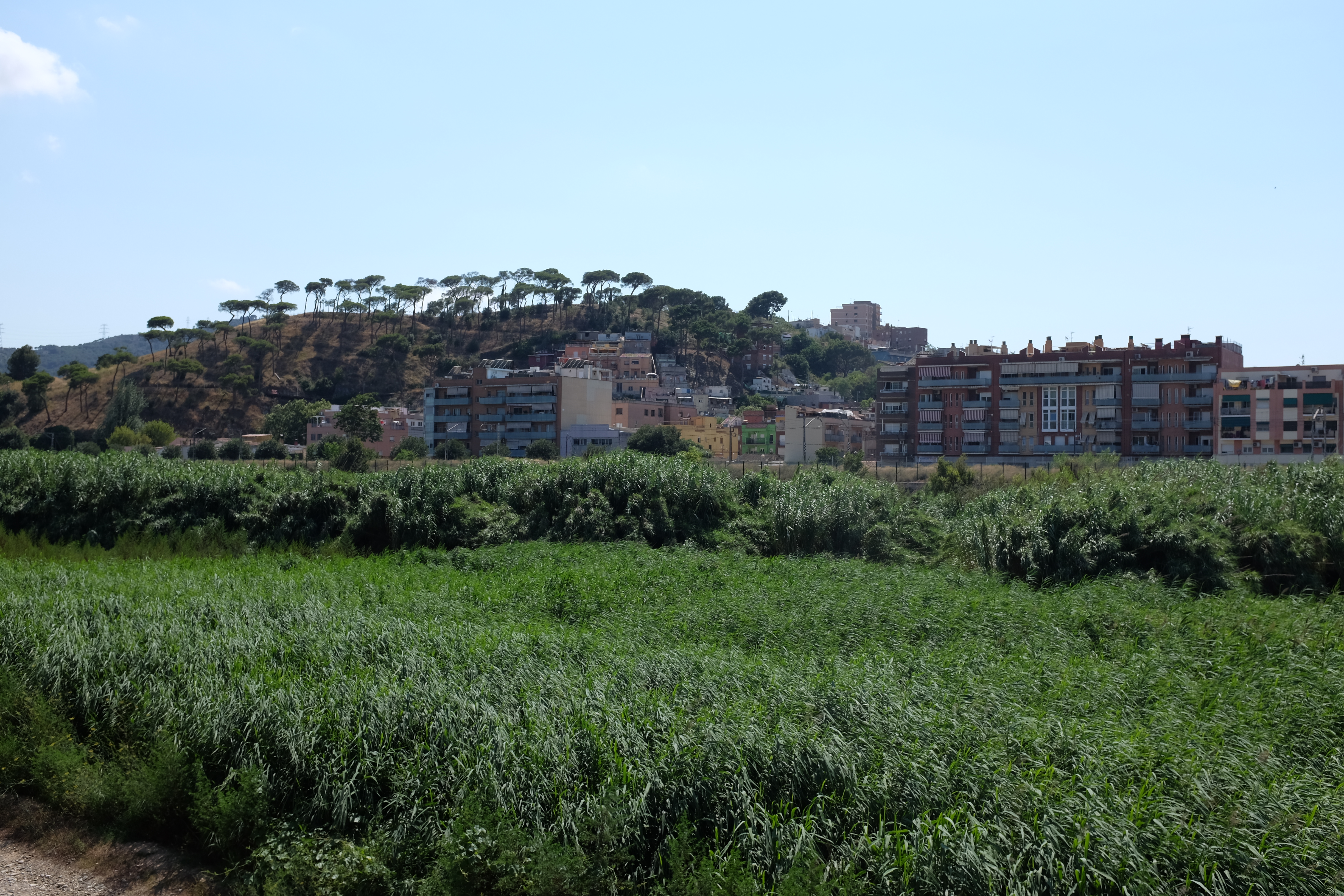
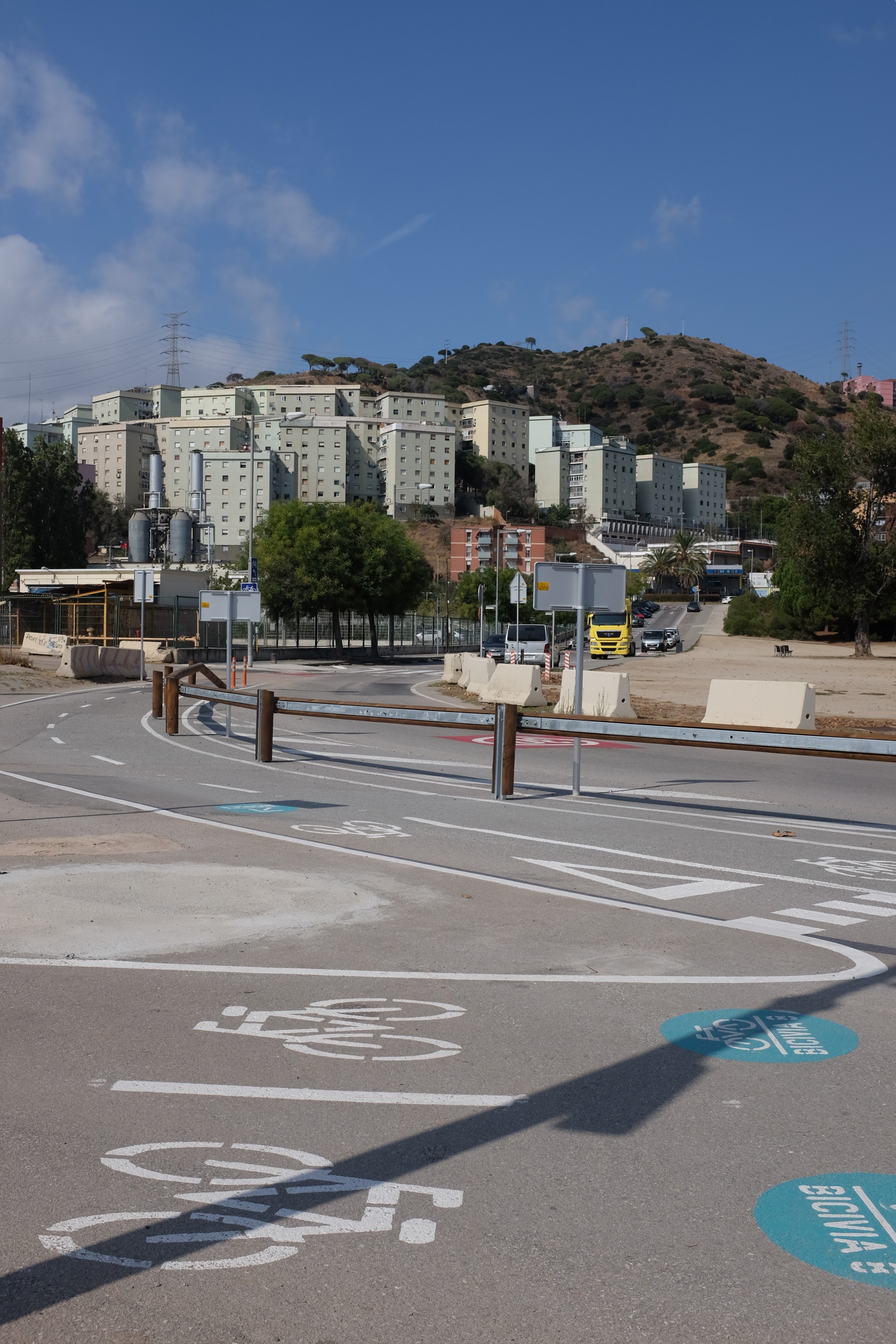
Just above the Cacaolot factory there is a cluster of candy coloured blocks of flats, the Les Oliveres neighbourhood. Aside from the obvious problem of constant chocolate smell, the neighbourhood places residents awkwardly far away from urban centres. The River Besòs Park shuts at night and therefore cannot act as a transport route for residents travelling by bike or electric scooter in the wee small hours.
However, the upper level street beside the river has its own cycle network which has just been finished and now connects the neighbourhood of Les Oliveres to metropoles like Badalona and Barcelona, meaning those without private cars no longer have to depend on infrquent night buses or expensive taxis.
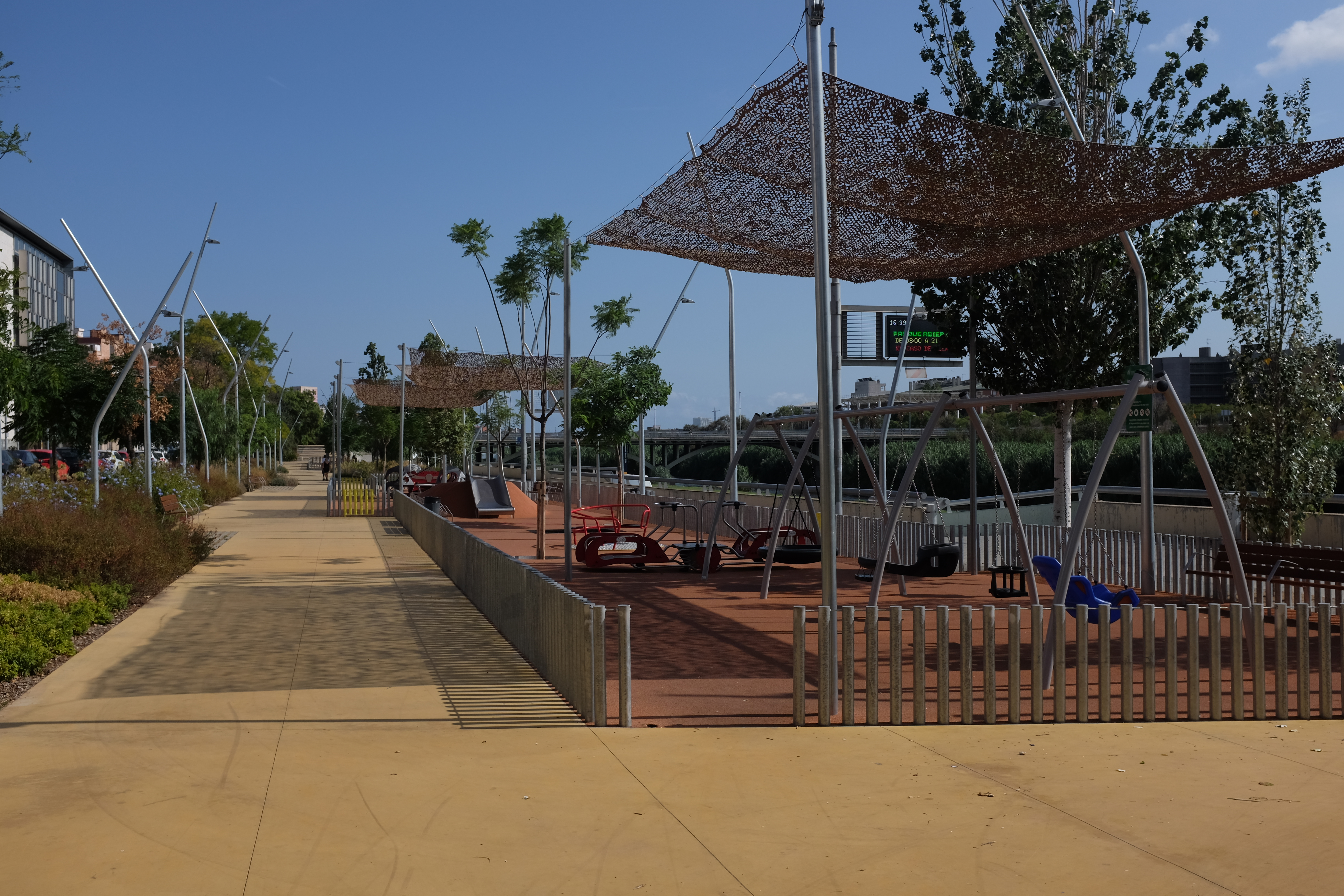
The upper street level is designed to encourage both active mobility and play. Playgrounds abound, with covers to protect children from the heat of the midday sun.
Paragliding Practice
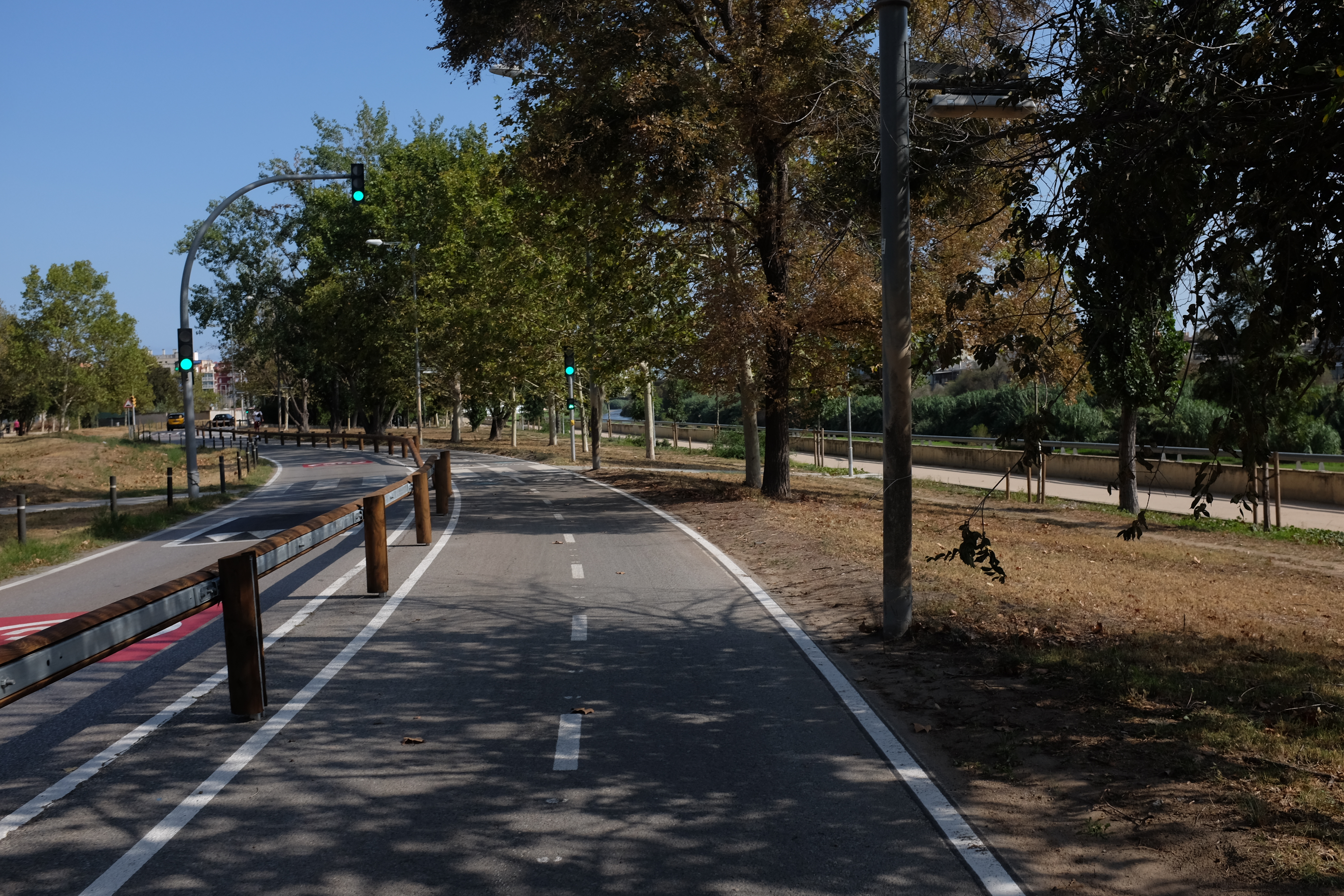
I would argue the biggest attraction of the River Besòs Park is its dual purpose as a park and a throughway for pedestrians and cyclists. In essence, that means it has benefits of a park (access to nature and no cars) combined with high quality cycling infrastructure. There is immense freedom in not having to worry about any traffic light stops or constantly checking if you’re about to be run over.
This liberation from vehicles makes it an incredibly popular place to be active. The most common activities are cycling, running, and roller skating, with afficionados zooming down the paved flat, 6.2km track in glee.
**Readers may notice the distinct lack of people in my photos. Most of them were taken at around 3pm in July and August, which is when much of residential Spain is a ghost town. Many have taken to the coast, and the rest are – very sensibly – staying inside at such a hot time of day. **
Other top picks are ball games like football, volleyball and cricket. Popular due to the abundance of soft grass, a luxury and real rarity in drought-stricken Barcelona. There’s also room for slightly odder hobbies: once I saw a paraglider practising takeoffs on the smooth grass. I wish I’d had my camera with me.
For every person trying to get a personal best in their chosen sport, at least one other person is lying snoozing on the grass, in perfect relaxation. There are plenty of picnics and it’s ideal for families, and those wishing to get away from the noise and pollution of the city streets for a while.
Street Art Museum
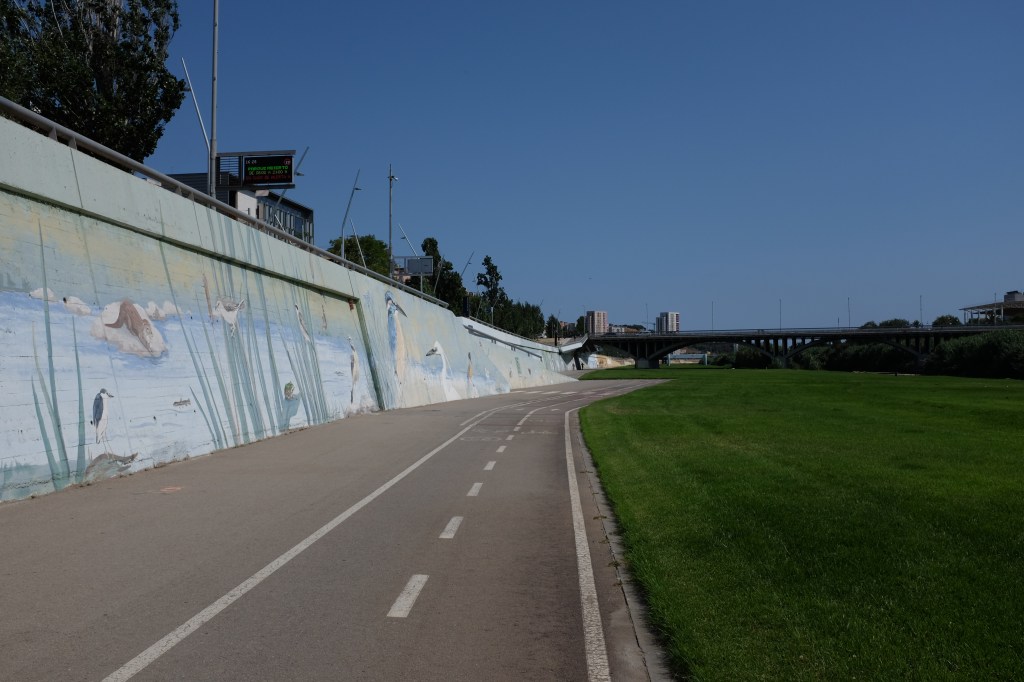
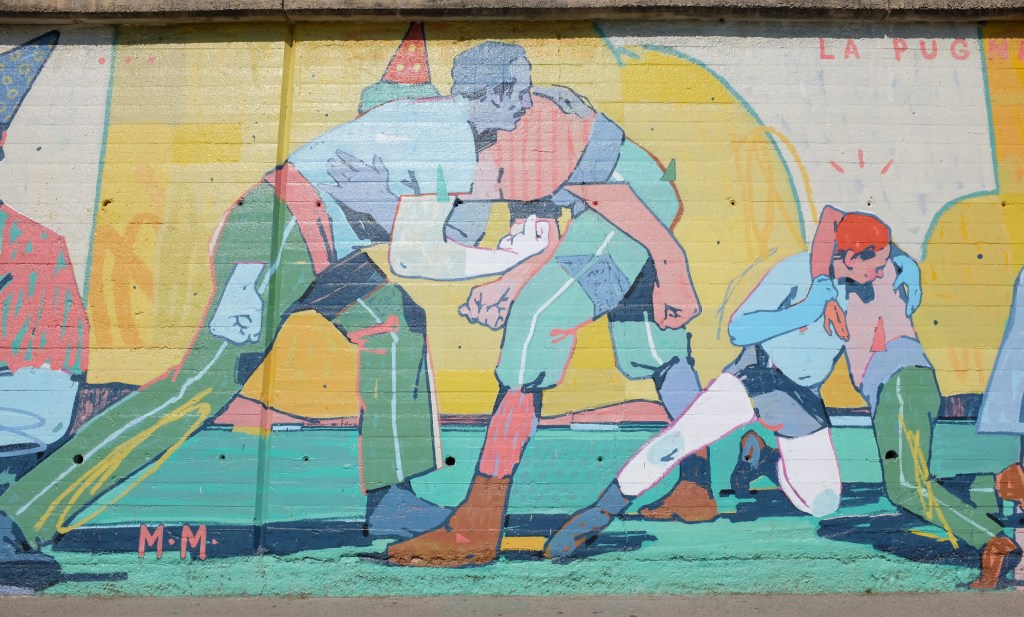
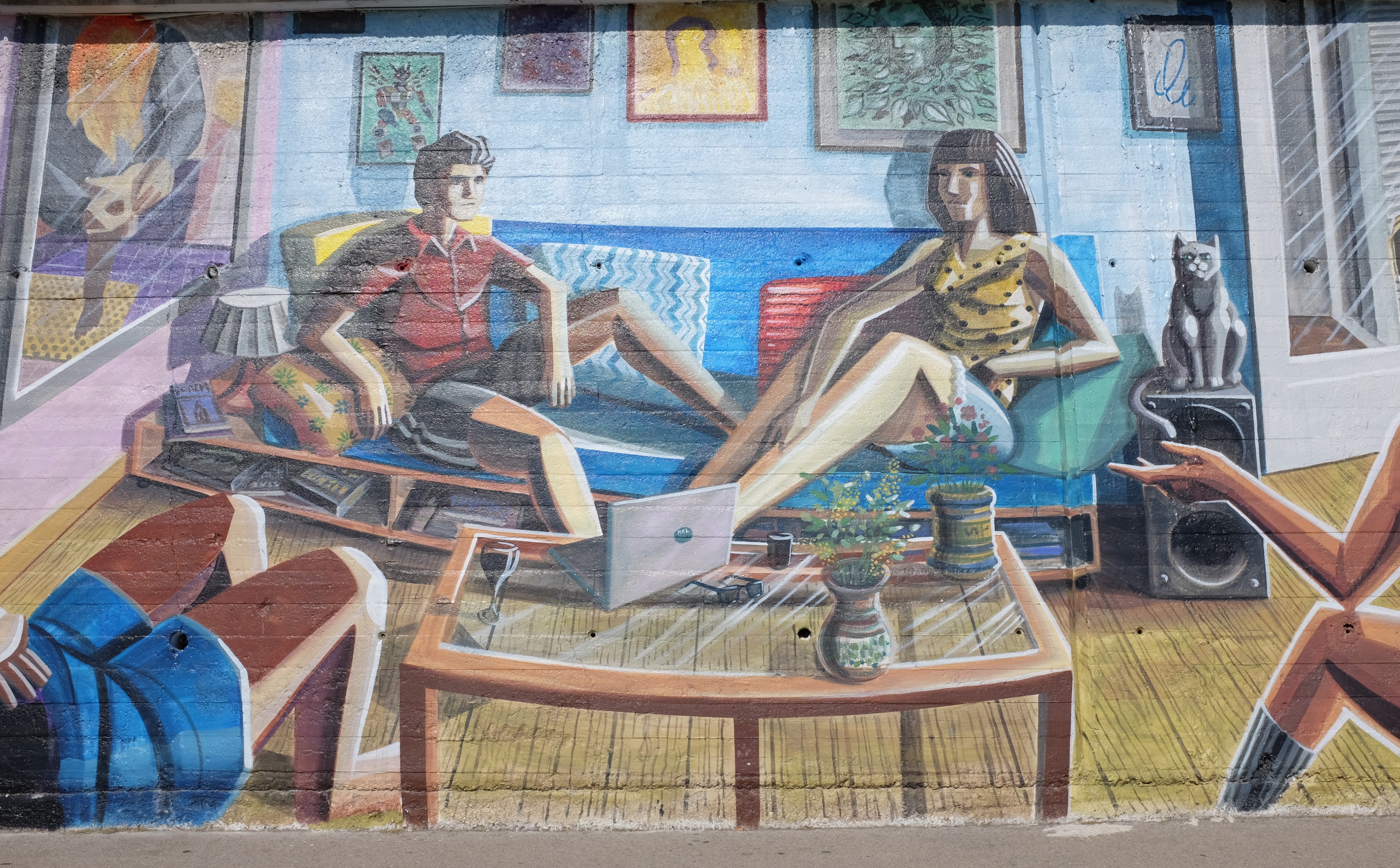
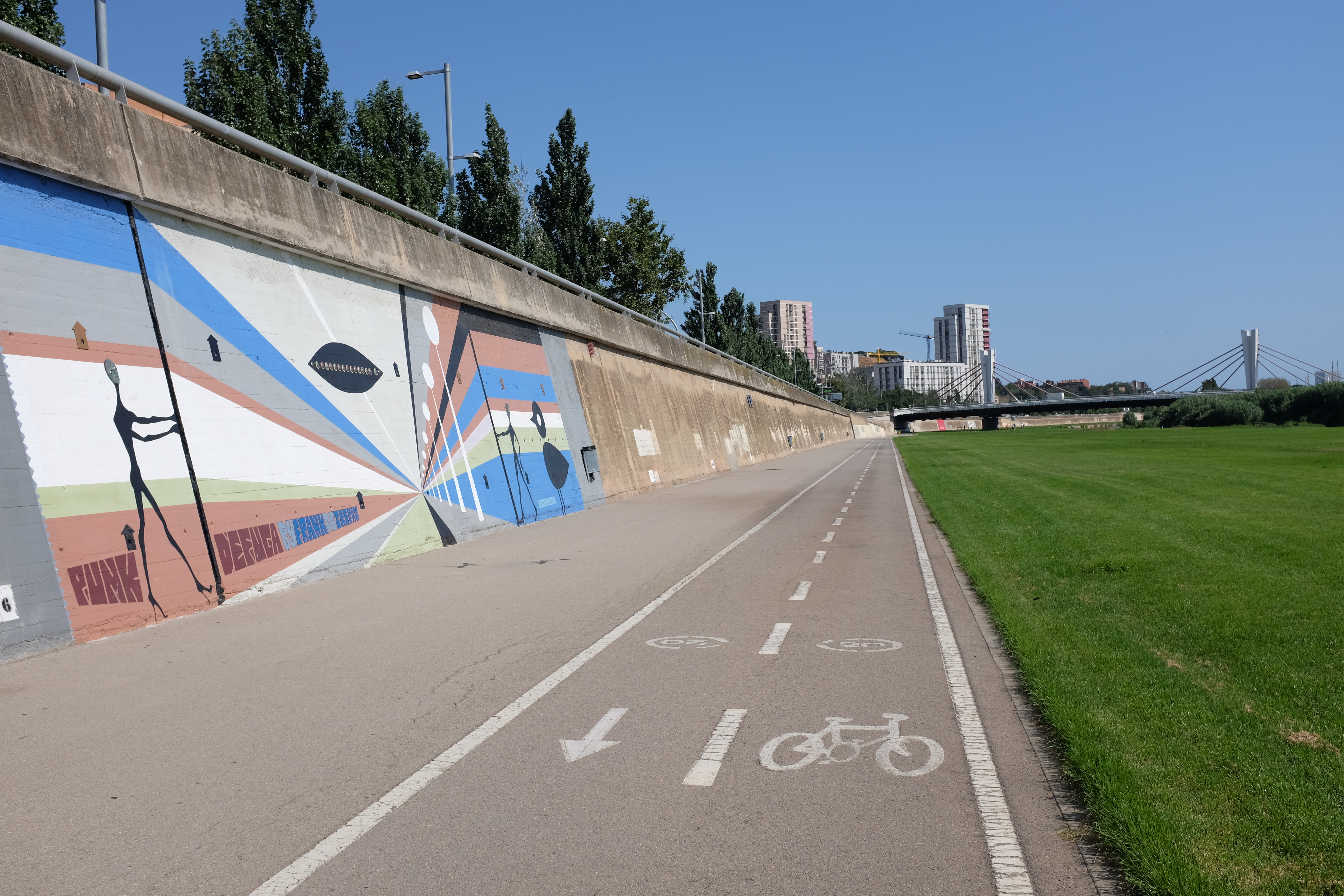
One of the real highlights of the park is the art that brightens up its imposing concrete walls. The BesArt museum is in fact the largest street art museum in Europe, and talented artists have used the space to their advantage.
Learn to Bike
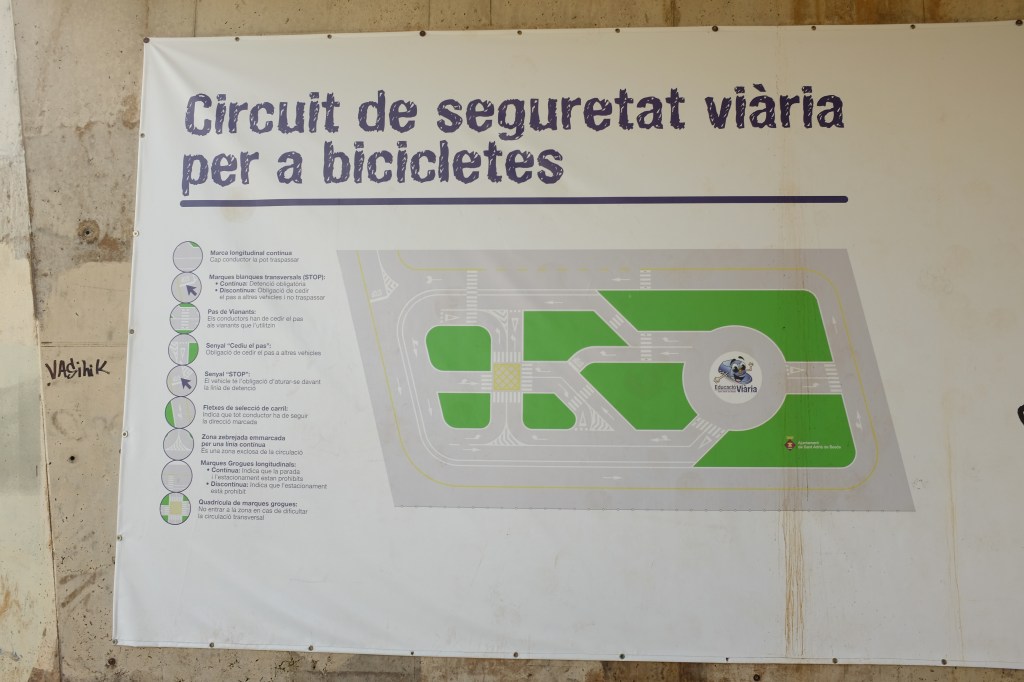
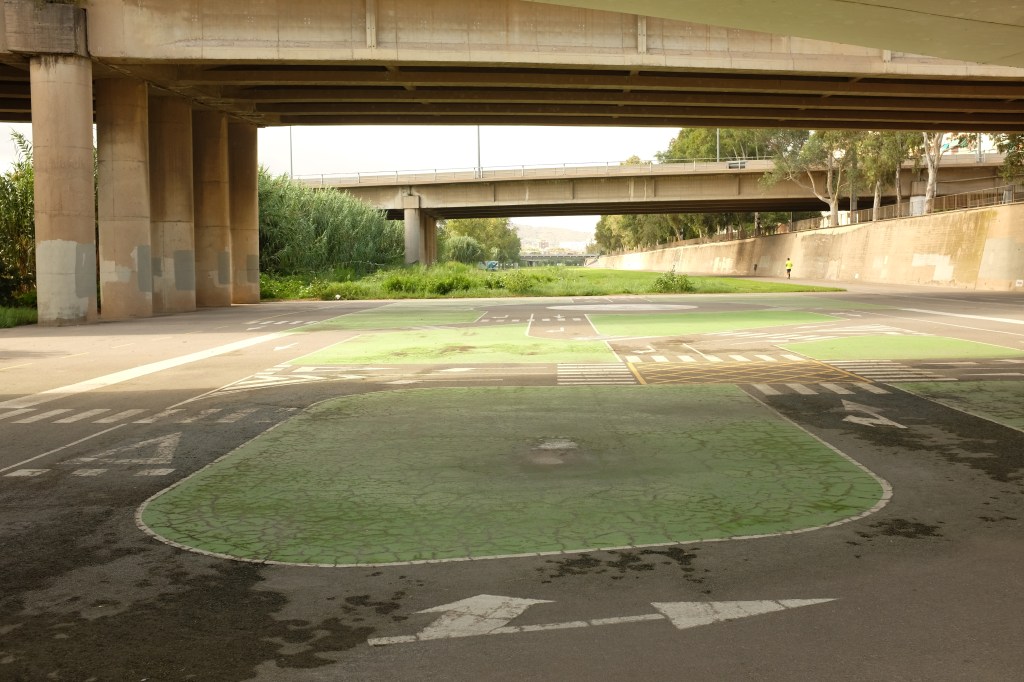
Once I’ve past the BesArt museum, there’s not long left on the path. One last piece of notable urban infrastructure is the Cycling Safety Course, a way for new cyclists to learn road markings in a secure environment. Sponsored by the local municipality and police station, it’s a great way to help children and adults learn the basics and gain confidence before heading onto the road.

To the Sea
In the final portion of my cycle, I spot two new posters. The first shows the river before its redevelopment. In the 70s, 80s and 90s the river was inaccessible to people, unhealthy and an eyesore. The second shows the transformation in 2004, the recuperation of the river, focussing on accessibility and enjoyment of citizens. It feels like a satisfying way to end the route, and a deserved recognition of the complete transformation of the area.
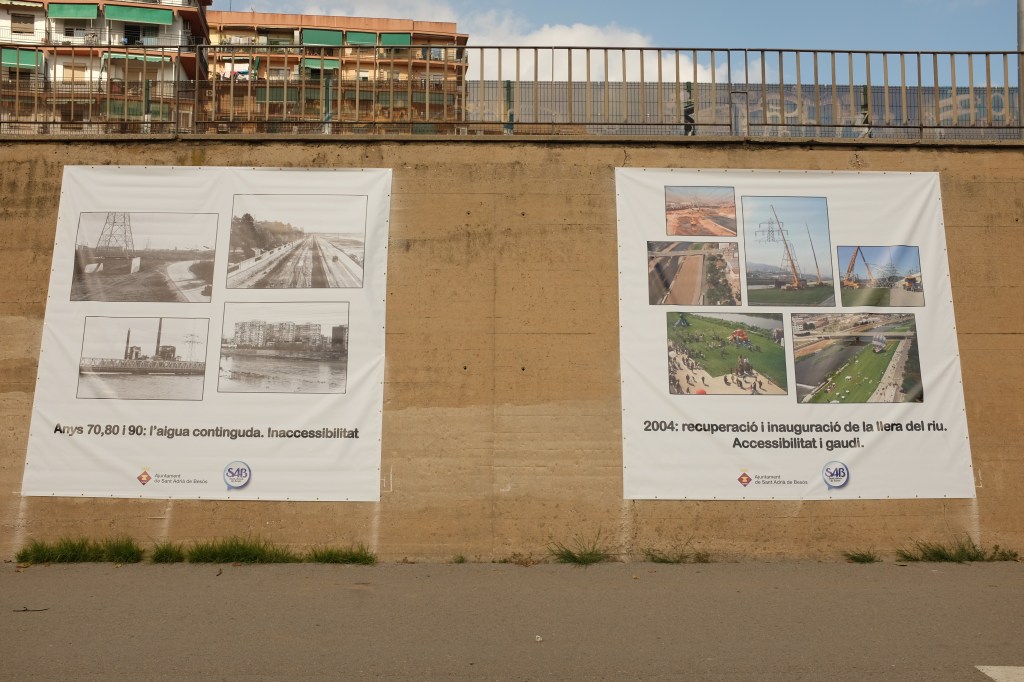
As I zoom past these signs, the river finally flows into the Mediterranean, and my cycle will soon end.
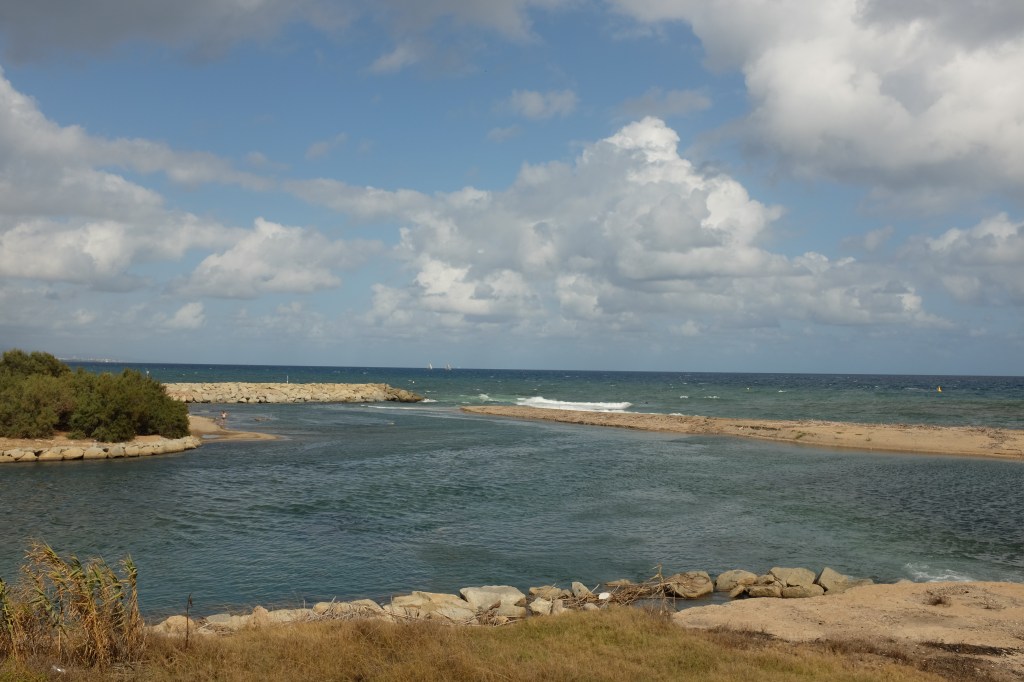
The importance of the River Besòs cannot be overstated. Whilst it is not the first thing that occurs to people when they think of urbanism projects in Barcelona, to my mind it is one of the most impressive and impactful. The park creates space for thousands of residents to relax, and enjoy active travel, as well as a welcoming habitat for flora and fauna. The Rver Besòs is a spectacular example of urban redevelopment, and I will enjoy cycling along its banks for as long as I can.
Sources
Barcelona Turisme, 2023. The Besòs river recovery project. [online] Available at: https://www.barcelonaturisme.com/wv3/en/page/5557/.html [Accessed 3 September 2024].
Gramenet.cat, n.d. Les Oliveres. [online] Available at: https://www.gramenet.cat/es/ayuntamiento/areas-municipales/mejoremos-nuestro-barrio/acciones-en-los-barrios/les-oliveres/ [Accessed 3 September 2024].
Hispagua, n.d. Restauración y rehabilitación de ríos: la recuperación del Besòs. [online] Available at: https://hispagua.cedex.es/sites/default/files/hispagua_articulo/op/28/op28_7.htm [Accessed 3 September 2024].
Public Space, 2023. Environmental recovery of the final section of the Besòs River. [online] Available at: https://www.publicspace.org/works/-/project/b015-recuperacio-mediambiental-del-tram-final-del-llit-del-riu-besos-1a-fase [Accessed 3 September 2024].
Sciencedirect.com, 2015. Environmental impact assessment of urban river rehabilitation projects. [online] Available at: https://www.sciencedirect.com/science/article/pii/S2386378115000031 [Accessed 3 September 2024].
UrbanizeHub, 2023. The Besòs River becomes a place that attracts people and protects biodiversity. [online] Available at: https://urbanizehub.com/the-besos-river-becomes-a-place-that-attracts-people-and-protects-biodiversity/ [Accessed 3 September 2024].
 270km
270km 
Leave a comment